C5 · Problem & fix
The C5 brake ladder
Published
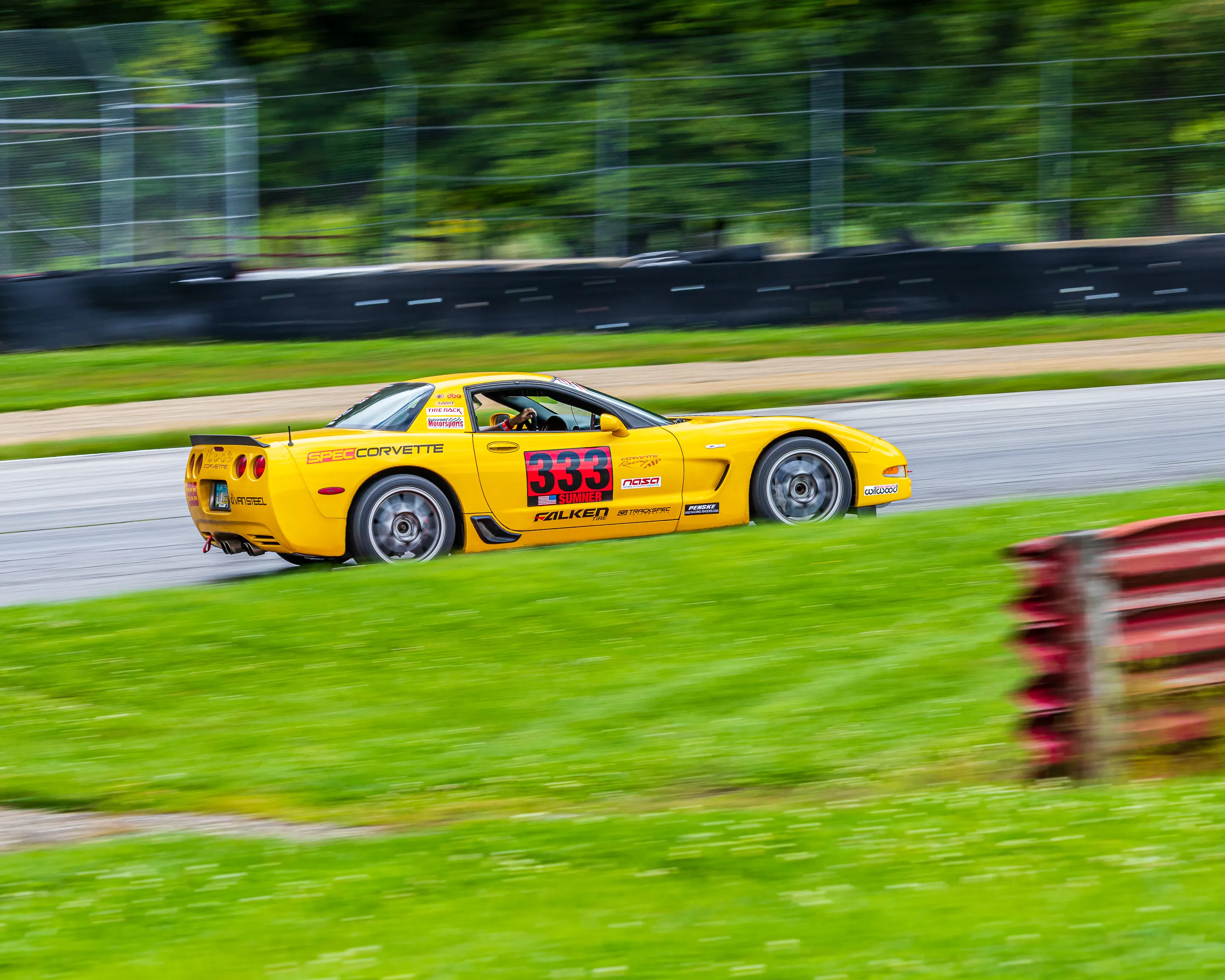
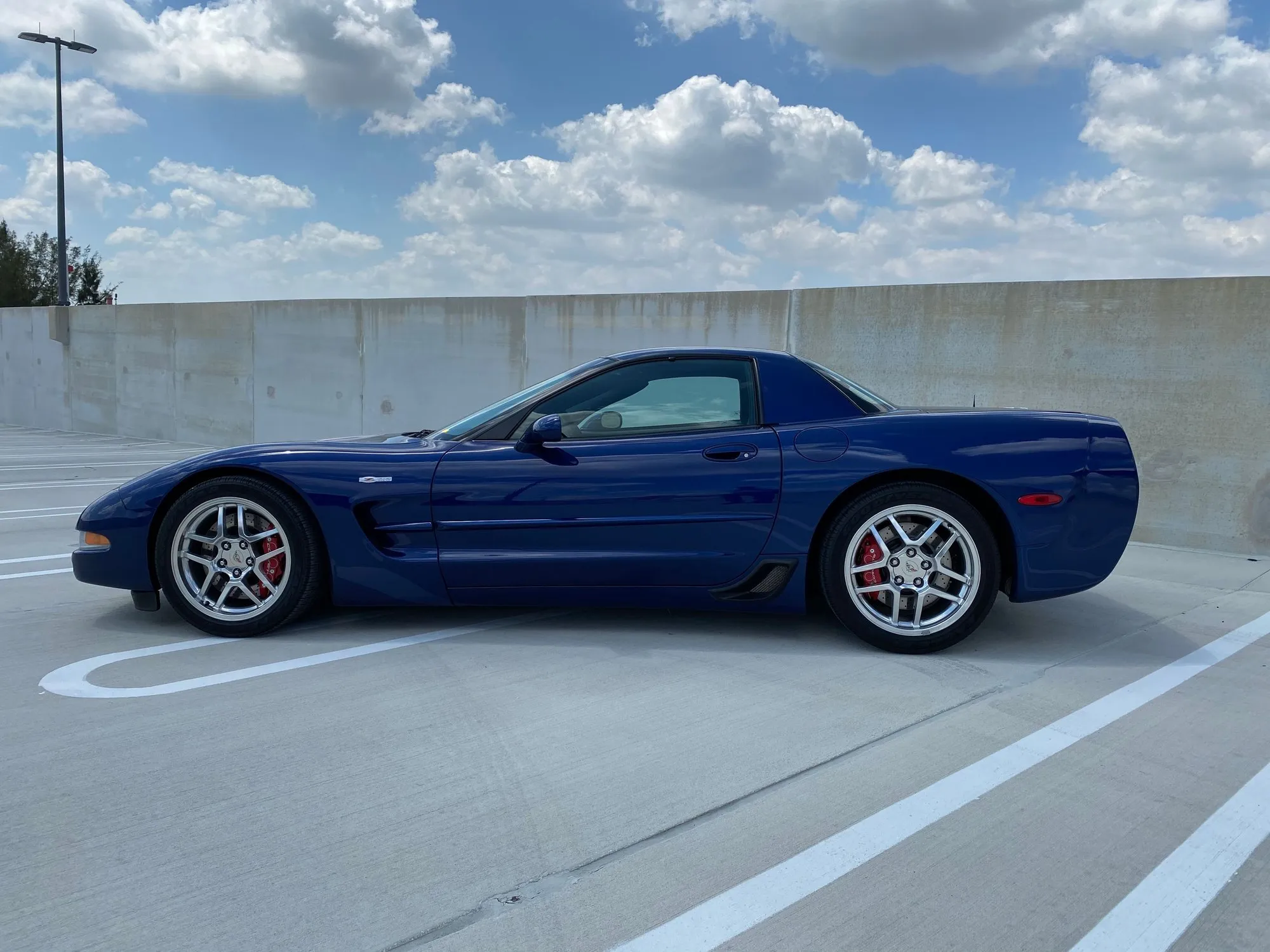
Every C5 (1997–2004) left the factory on the same brakes. GM’s spec sheets give one rotor size for the coupe, the convertible and the Z06 alike: 325 mm across up front, 305 mm at the rear. The Z06 got red calipers, high-performance front pads and scoops that feed air to the rear brakes, and that’s the whole difference. So one ladder fits every C5, from a bottle of racing fluid at about $25 to a front big-brake kit at about $2,700.
Wanting more is the natural part. Here are the rungs in order, with what each one fixes, how hard it is and what it costs as of October 2026. This site’s verdict, argued in Where most owners should stop: a street C5 is done after fresh fluid and a good set of pads, and a first track day asks only a little more. The rest of the car is covered in the C5 buyer’s guide.
Section 01
What the factory gave every C5
Every C5 has four-wheel vented disc brakes with aluminum, pin-guided calipers: two pistons in each front caliper, one in each rear, per GM’s 1998 and 1999 Heritage Center kits. GM gives the rotors as 325 x 32 mm front and 305 x 26 mm rear, about 12.8 and 12 inches across, in the 2001 kit and the 2002 kit. Some GM kits print 12.6 and 11.8 inches for the same metric size. The millimeters never change, and Wilwood calls the stock front rotor 12.80 inches.
Bosch four-wheel ABS with traction control came on every car. Active Handling, GM’s stability control, arrived as an option and became standard for 2001, when GM also fitted a lighter Bosch 5.3 modulator and an electronic rear proportioning program in place of the old proportioning valve, per GM’s 2001 spec sheet.
The Z06 (2001–2004) shares the base car’s rotor sizes. GM painted its calipers red, added scoops in the rear rocker panels to cool the rear brakes, and fitted high-performance front pads that, by GM’s 2003 and 2004 owner’s manuals, “will normally exhibit some low speed noise” and make more dust.
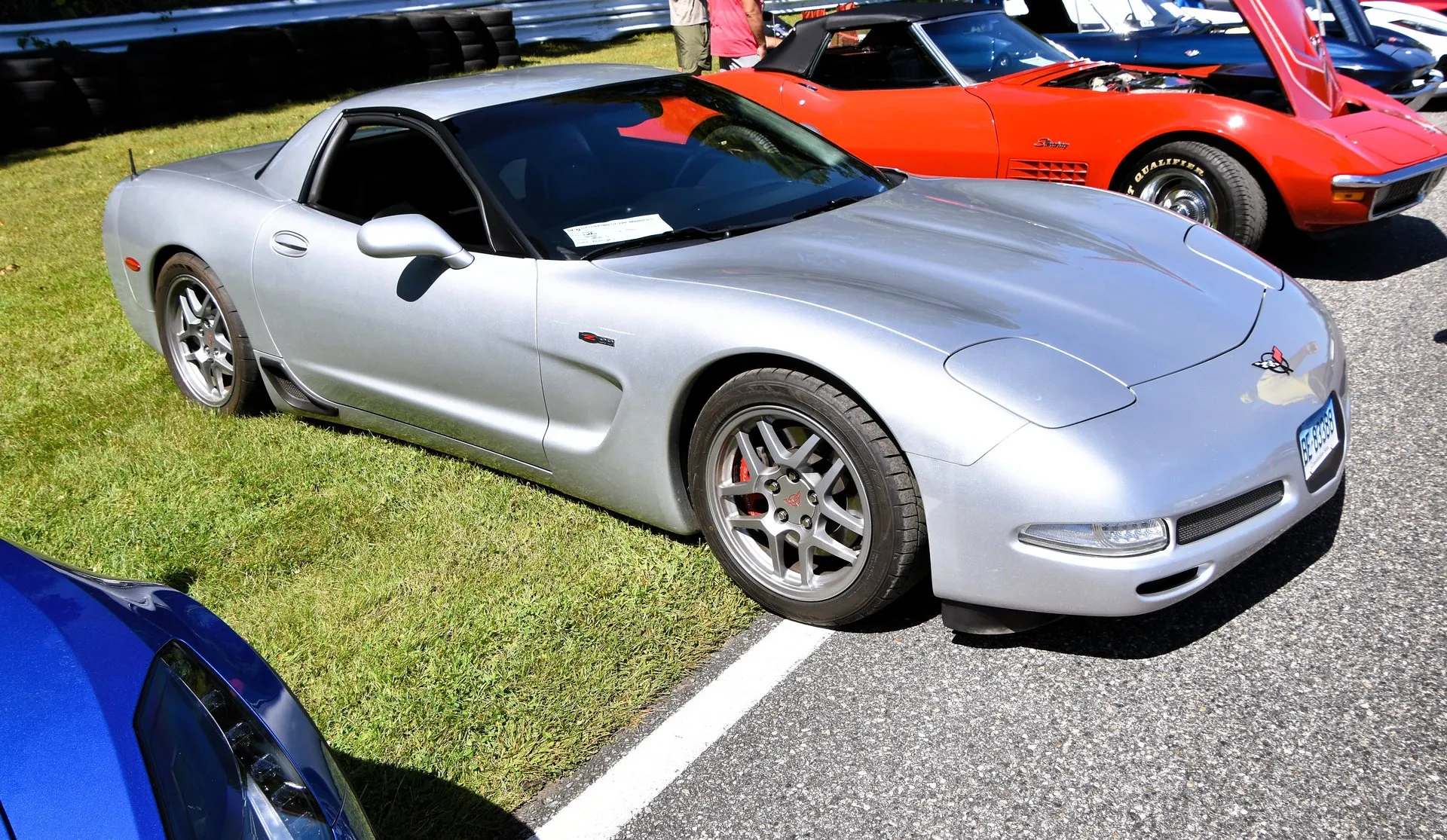
The fluid is the same everywhere too. Every C5 owner’s manual from 1997 to 2004 calls for DOT 3: Delco Supreme 11, GM 12377967 (OEM), or an equivalent, new from a sealed container (1997 manual).
Section 02
Find the problem before you buy parts
Upgrades don’t cure faults. Work out what the car is doing now, then climb.
A pulsing pedal or a shaking wheel. Owners call it warped rotors. NHTSA holds 17 C5 complaints about rotor vibration, pulsation, or warped or cracked rotors, 14 of them from 1997–1999 cars and 10 from 1998 alone (this site’s keyword count). One 1997 owner went through four sets of rotors in under 13,000 miles. No GM bulletin on it turns up in NHTSA’s files. GM’s manual does name a usual suspect: “Improperly tightened wheel nuts can lead to brake pulsation and rotor damage” (2004 manual). Tighten them evenly, in the proper sequence, to 100 lb-ft (140 N·m) (2004 manual). Owners in one CorvetteForum thread blame uneven or over-tightened lug nuts, or uneven pad deposits, rather than truly warped iron. Any job with the wheels off starts with lifting the car; the new-owner gear guide covers the jack pucks for that.
A soft or sinking pedal. GM says to see a dealer if the pedal’s travel increases quickly (2004 manual). It also says not to top off the fluid: GM adds or removes brake fluid only when work is done on the hydraulic system, and treats a falling level as a sign of wear or a leak (2004 manual). Old fluid and air in the lines are Rung 1’s job.
An ABS or traction light. This is the big one in the records: 92 of the 137 C5 service-brake complaints at NHTSA mention ABS, traction control, Active Handling or the brake module, about two-thirds, by this site’s count. With the ABS light on, “you still have brakes, but you do not have anti-lock brakes,” GM says (2004 manual). The module is the EBCM (electronic brake control module), and which years’ modules can be rebuilt is in C5 years to avoid. One cause is self-inflicted: GM bulletin PIC-5368 ties ABS and traction lights, with codes C1225/C0035 and C1226/C0040, to aftermarket braided stainless brake lines. More on that in Rung 4.
Squeal and dust from a 2002–2004 Z06. Normal, by GM bulletin 070303 and the 2003 and 2004 owner’s manuals. Not a fault, and no reason to replace anything.
Section 03
Brake complaints and bulletins on record
Brakes are a small part of the C5’s file. Of 1,839 distinct C5 complaints at NHTSA, 155 carry a brake label, about 8%. Steering, the column lock, dominates the C5 record instead. Counts by model year, from NHTSA’s complaint data (opens in new tab) pulled October 25, 2026 (the labels are NHTSA’s; the keyword columns are this site’s count of complaint text):
| Model year | All complaints | Brake-labelled | ABS, traction or module wording | Rotor vibration or warping | Parking brake |
|---|---|---|---|---|---|
| 1997 | 153 | 7 | 2 | 2 | 1 |
| 1998 | 399 | 36 | 14 | 10 | 9 |
| 1999 | 308 | 25 | 14 | 2 | 6 |
| 2000 | 277 | 32 | 28 | 3 | 0 |
| 2001 | 203 | 22 | 10 | 0 | 0 |
| 2002 | 170 | 16 | 12 | 0 | 1 |
| 2003 | 112 | 7 | 5 | 0 | 0 |
| 2004 | 217 | 10 | 7 | 0 | 1 |
| All | 1,839 | 155 | 92 | 17 | 18 |
The ABS-type complaints peak in 2000. Parking brakes that don’t hold make 18 complaints, 16 of them from 1997–1999. GM never recalled a C5 for its brakes.
GM’s bulletins on file with NHTSA that touch C5 brakes:
070303(2002–2004): low-speed noise and more brake dust with the high-performance front pads.070801(2002): brake pad replacement information.010522002(2001): brakes that seem to stay partly applied after the pedal is released, or brake lights that stay on.04086(2004): a rear brake line that can touch the left exhaust manifold and pipe.PIC-5368(1997–2011 Corvettes): ABS and traction lights and codes due to aftermarket braided stainless lines. NHTSA’s summary doesn’t say why.PIC-5391(1997–2004): diagnosis when the ABS and traction control light is on.PIT4907A(2002–2004): the coating on new GM rotors wears off with normal braking, which GM calls normal.
None on file covers rotor vibration or warping, fade, fluid change intervals or caliper failure.
Section 04
Rung 1: fresh high-temperature fluid
Fixes: a soft pedal from old fluid, and fluid that boils on track. Difficulty: a driveway job for an owner who has bled brakes before. Cost: a 500 ml bottle of racing DOT 4 fluid runs about $25, as of October 2026.
GM’s DOT 3 spec has no change interval. The 2004 maintenance schedule says only to inspect the brake system at each service, and the 1997 manual says hard-braking owners may need inspections more often. On the street, that’s enough. On track, fluid is the first worry: owners prepping a C5 for its first track day flush in new fluid and watch that it doesn’t boil.
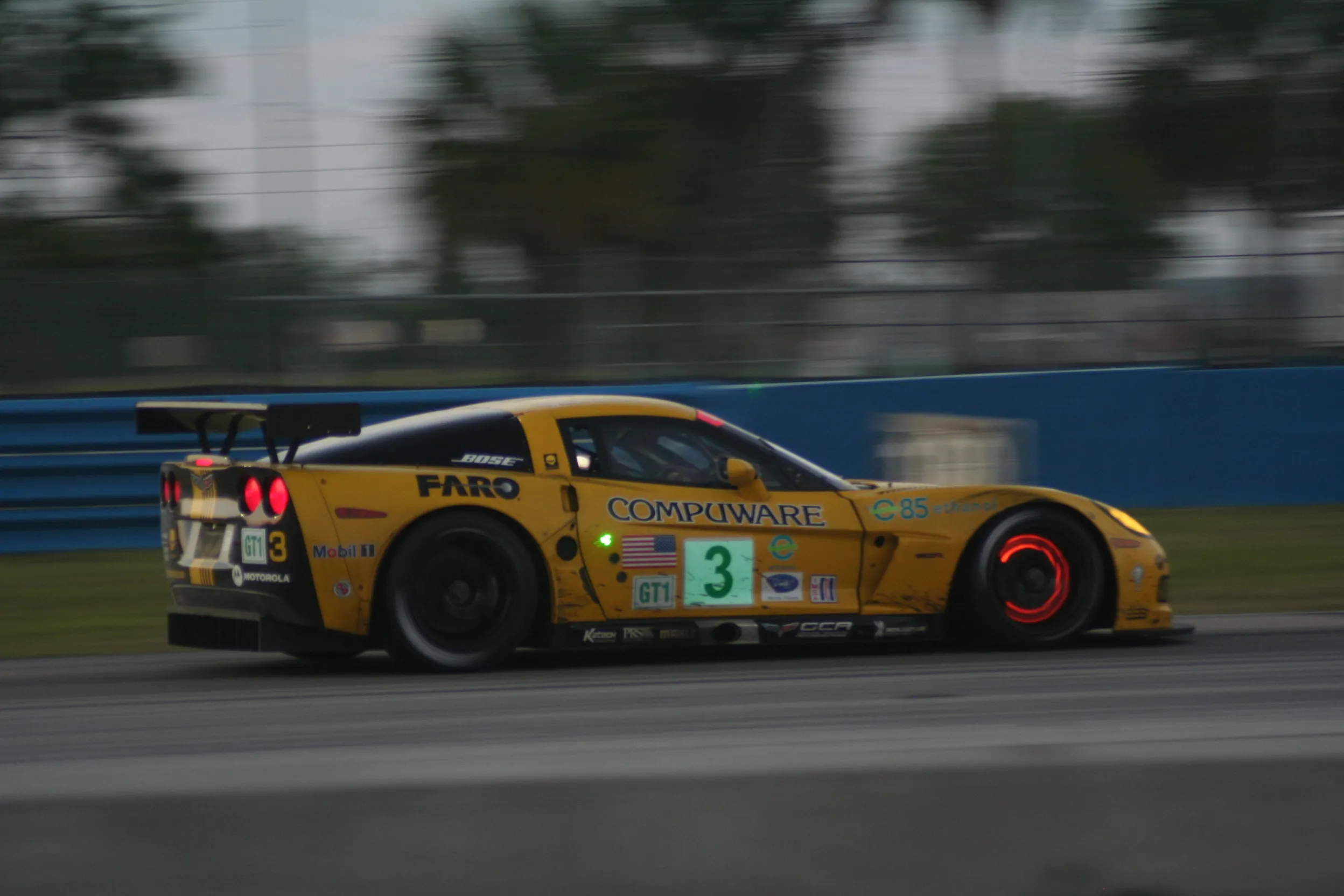
Fluid specs carry two boiling points: dry, for fresh fluid, and wet, for fluid that has taken on water. Motul’s data sheet (opens in new tab) gives the DOT 4 minimums as 230 °C (446 °F) dry and 155 °C (311 °F) wet, and rates its RBF 600 at 312 °C (594 °F) dry and 205 °C (401 °F) wet. It measures the wet figure after 3% water, which it calls representative of a year of use. Motul says RBF 600 exceeds the DOT 3 standard (except for viscosity at -40 °C) and suits conventional steel-rotor brakes like the C5’s.
Here GM and the owners part ways. GM’s manuals say “use only DOT-3.” Owners who track their cars run DOT 4 racing fluids; the ones named in CorvetteForum threads are ATE, Castrol SRF and Motul. This site’s call: fresh DOT 3 is right for a street car, and for track days a high-boiling DOT 4 is the owner-standard upgrade. Flush the old fluid out completely rather than mixing: Motul says never to mix RBF 600 with silicone (DOT 5) or mineral fluids, and to avoid mixing it with lower-performance glycol fluids.
The pick for a track car is Motul RBF 600, for its published boiling points and Motul’s rating for ordinary steel rotors. The budget path for a street car is GM’s own DOT 3, Delco Supreme 11 or an equivalent, fresh from a sealed bottle. The other top-shelf name in owner threads is Castrol SRF.
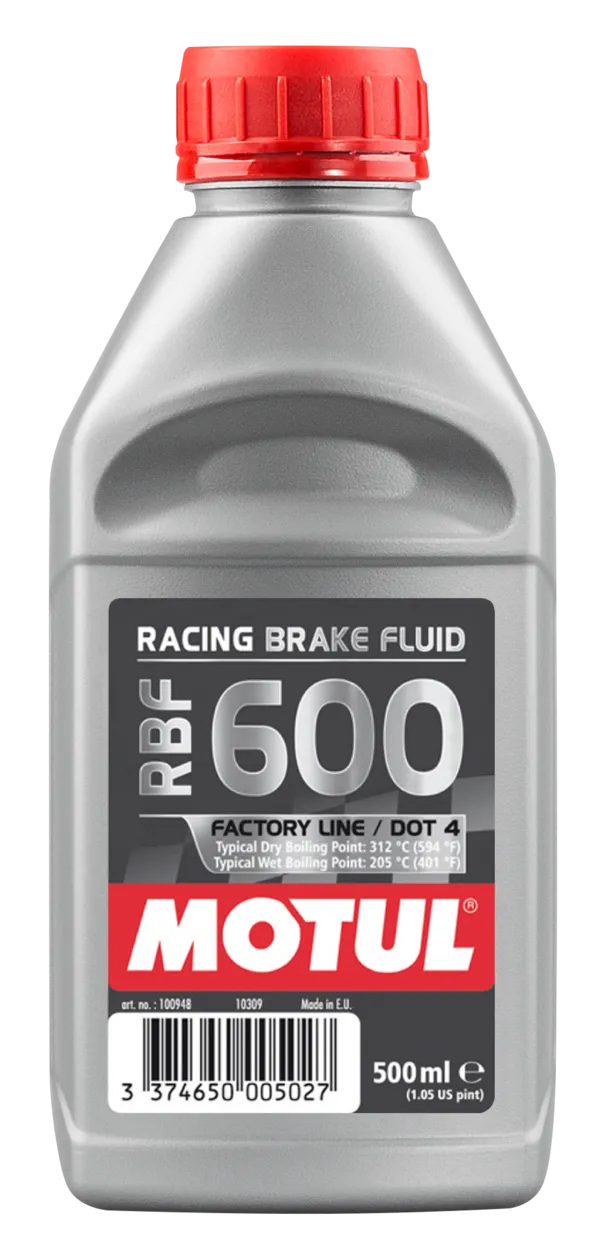
Image: Motul (opens in new tab)
Motul RBF 600 Factory Line brake fluid, DOT 4, 500 ml
A fully synthetic DOT 4 with published boiling points well above the DOT 4 minimums, rated by Motul for ordinary steel-rotor brakes. Flush it in completely; don't mix.
Check price on Amazon (opens in new tab) Paid link
Two cautions from GM’s manual: a few drops of mineral oil, such as engine oil, can damage brake parts badly enough that they must be replaced, and brake fluid damages paint (2004 manual).
Owners flush by bleeding each wheel until fresh fluid comes through, by gravity or with a pressure bleeder. No C5 owner’s manual gives a bleed procedure or the system’s fluid capacity, so work from the service manual. If air reaches the ABS unit (lines opened at the module, or a pedal still soft after new hoses), owners report the ABS needs an automated bleed run from a scan tool such as GM’s Tech 2. For most owners, that part is a shop job.
Section 05
Rung 2: better pads
Pads change the car more than anything else on this ladder for the money, by owner consensus. Two GM rules come first. Pads are always replaced as complete axle sets, and GM warns that “brake linings that are wrong for your vehicle” can upset the balance between front and rear brakes (2004 manual). Owners run aftermarket pads widely anyway. This site’s rule: buy pads the maker lists for this exact car, and fit matched front and rear sets.
Street: Hawk HPS
Fixes: a pedal that feels dull in hard street driving. Difficulty: a wheels-off job for a home mechanic. Cost: performance street pads for all four corners run about $375 in parts, as of October 2026.
Owners say stock pads are fine for an occasional event, and Hawk, Carbotech and Wilwood come up for anything harder. The street pick is Hawk’s HPS: the front set, HB247F.575 (aftermarket), is listed for every 1997–2004 C5 including the Z06, and Hawk calls the compound gentle on rotors, with long pad life. The rear set is HB248F.650 (aftermarket), the Hawk HPS rear pads (opens in new tab) (paid link). Hawk’s fitment list shows the 2004 Z06 only under a general 2004 entry; 2004 Z06 owners should confirm in Hawk’s parts lookup. Owners split on noise and dust: one finds Hawks noisy and dusty, another doesn’t.
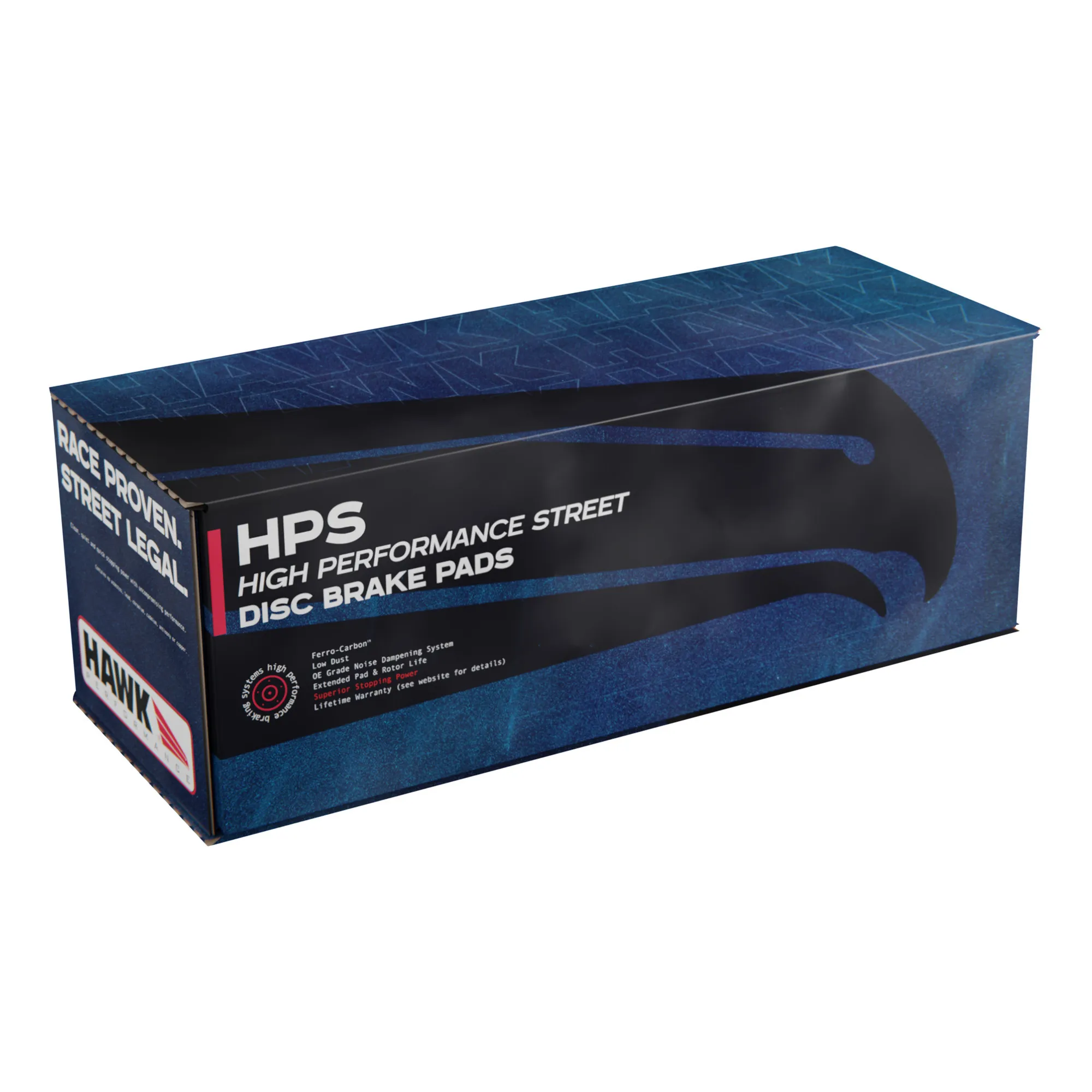
Hawk Performance HPS brake pads, front (HB247F.575)
Hawk's street compound, listed for every 1997–2004 C5 including the Z06. A step up for hard street driving; the matching rear set is HB248F.650.
Check price on Amazon (opens in new tab) Paid link
The budget path is factory-type ACDelco pads, which is also the path GM’s manual asks for.
Track days: Hawk HP+ and real track compounds
Fixes: pads that fade or wear away in a day of laps. Difficulty: the same job as street pads. Cost: crossover street and track pads for the front axle run about $235 in parts, as of October 2026.
Street pads aren’t track pads; of a street line on track, one owner warns “you will burn them up.” The pick for a car that’s driven to the track and home again is Hawk’s HP+, HB247N.575 (aftermarket, front), which Hawk calls a crossover street and race compound for low to mid temperatures, fade resistant and ideal for autocross. One owner says it “can work fine” for an HPDE (a high-performance driving event: a coached track day), and another runs it for autocross. A first-track-day thread suggests factory Z06 pads when the stock ones are down to less than half.
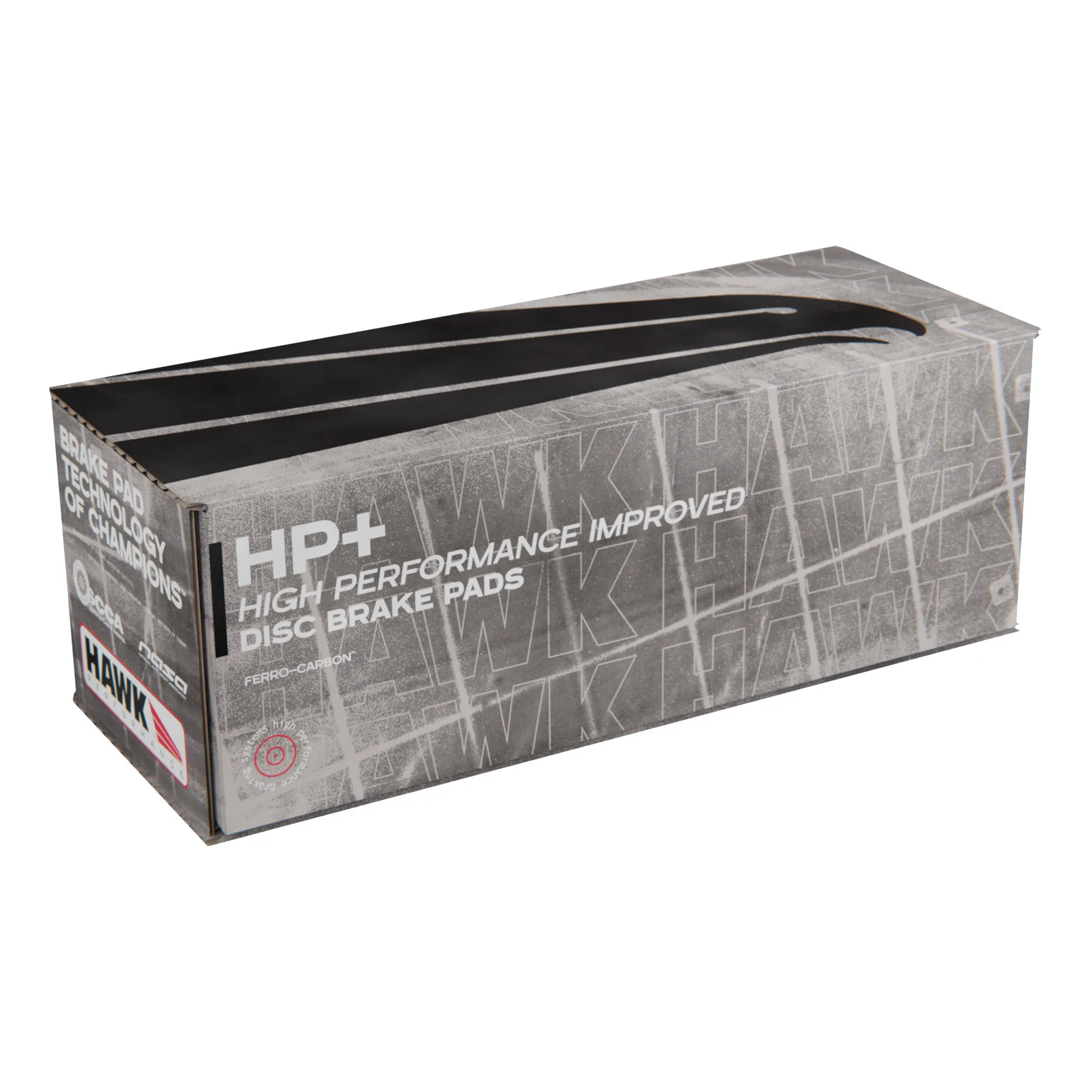
Hawk Performance HP+ brake pads, front (HB247N.575)
Hawk's crossover street and race compound, listed for 1997–2004 C5s including the Z06. Owners name it for autocross and HPDE days.
Check price on Amazon (opens in new tab) Paid link
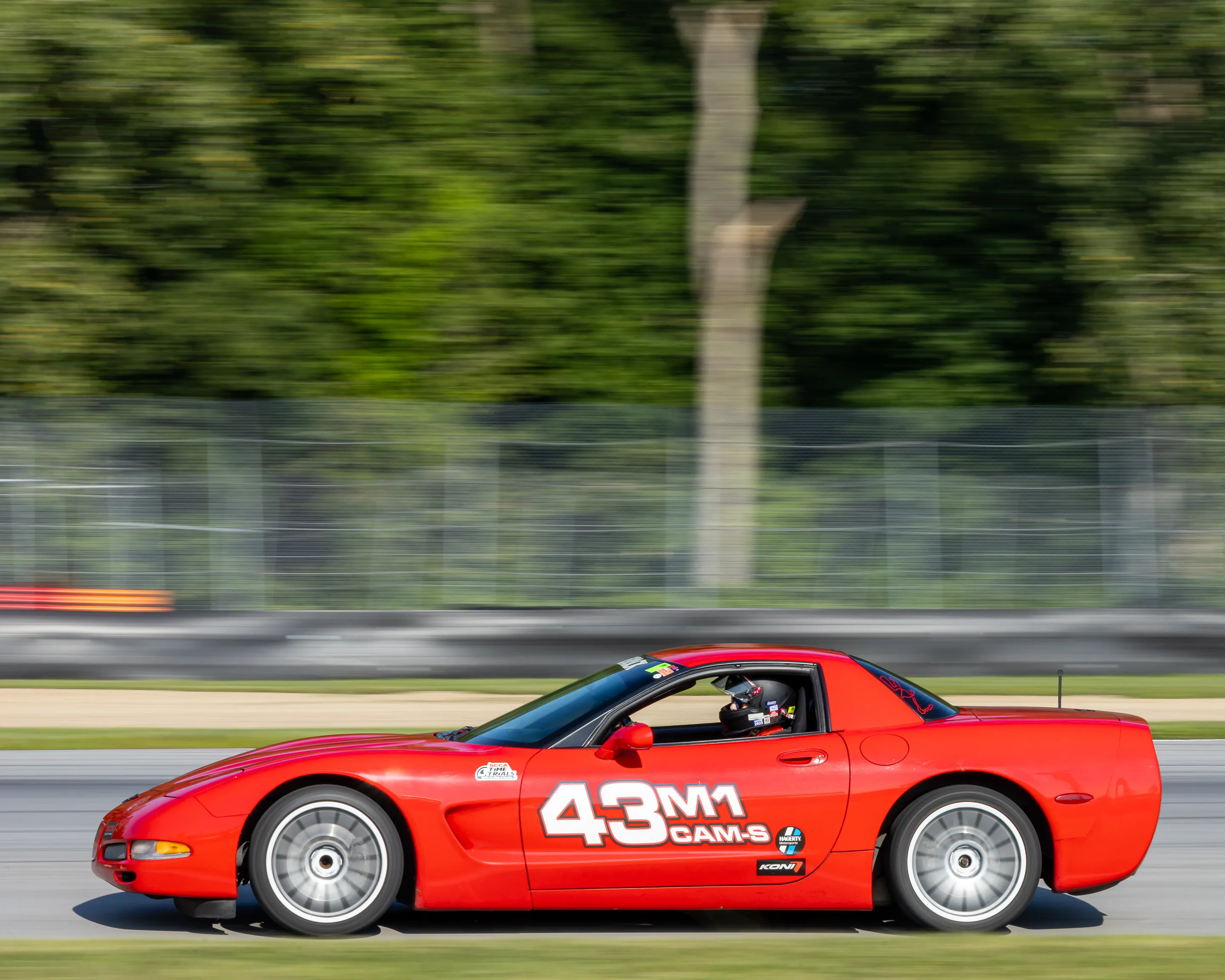
Past that, owners name dedicated track compounds: Carbotech’s XP series, PFC 01 and 11, and Hawk Blue. They’re track pads, not street pads. A CorvetteForum editorial ran a stock C5 Z06 on PFC 11 sprint pads at a track day, noting that sprint pads wear faster than endurance pads but suit a track day.
Breaking them in
GM says to avoid hard stops for the first 200 miles (322 km) or so, every time new linings go on (2004 manual). Owners add that new pads should be burnished (bedded in) before a track day; one saw unburnished pads “disintegrate” after a few sessions. Hawk links its own bed-in instructions from its product pages.
Section 06
Rung 3: plain rotors, not drilled ones
Fixes: worn rotors, and rotors that crack on track. Difficulty: a wheels-off job, a little more work than pads. Cost: varies widely by brand; owners name ACDelco, NAPA premium and Centric Premium plain rotors for street replacements.
Drilled rotors look the part, and owners agree on what happens when they meet a track. One CorvetteForum thread reports “many many many reports of drilled rotors cracking at the holes” (opens in new tab), and its consensus is a plain (blank) rotor with performance pads as both the performance and the budget choice for HPDE. Elsewhere it’s “DO NOT use drilled rotors on the track,” and the cracks start at the holes. A brake vendor in a 2020 thread advises against drilled rotors on any car driven hard. Owners prefer slotted or plain, and name PowerSlot and Centric-made slotted rotors.
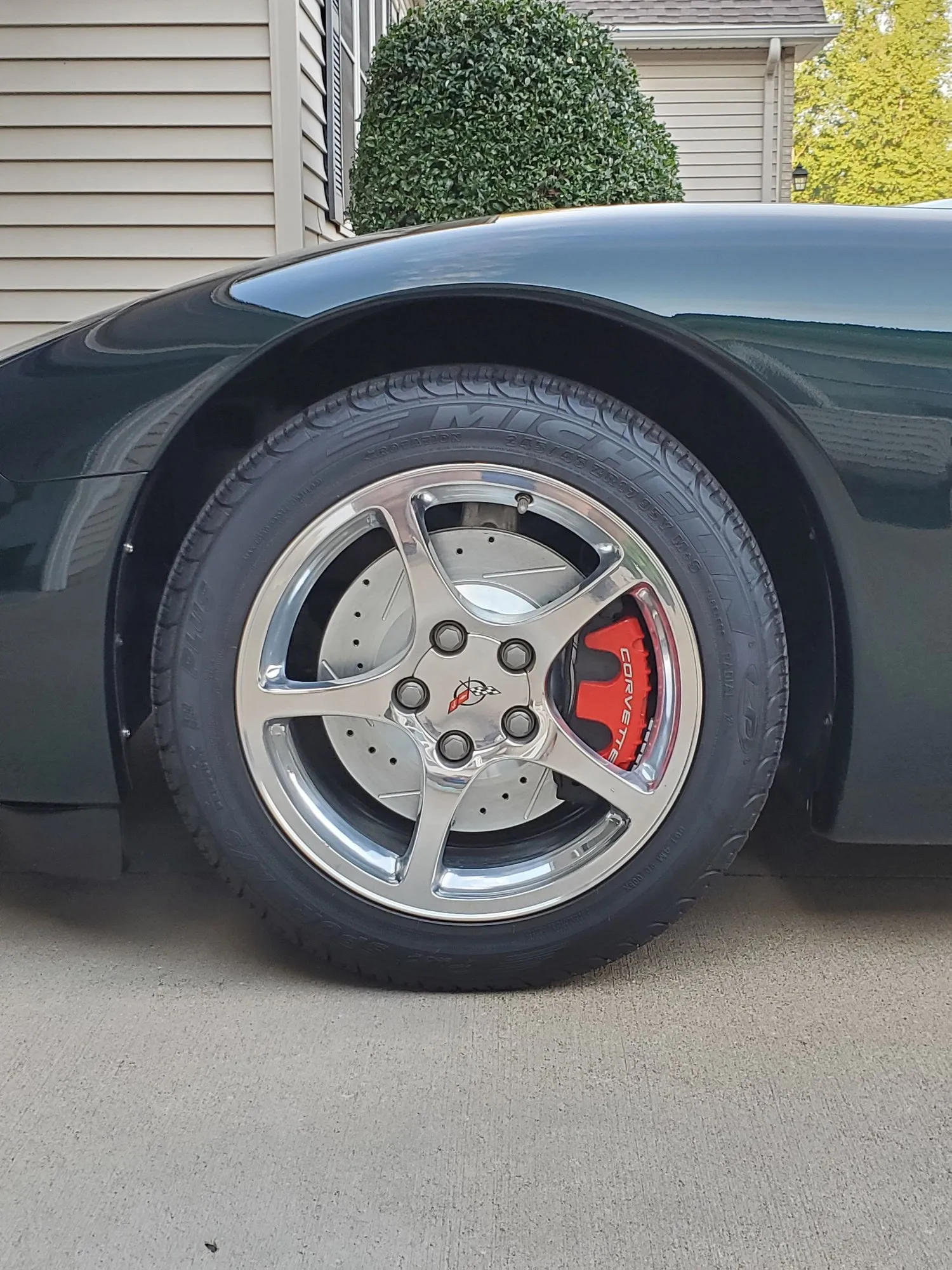
The honest other side: street-only owners report drilled rotors lasting, one set of Baer Eradispeeds for 25,000 miles and another for four years. Budget drilled-and-slotted sets are popular for the look. One 2020 poster suggests modern iron may crack less, an unproven claim. This site’s call: drilled rotors on a street car are a styling choice, and on a car that sees the track they’re a mistake.
Even plain rotors crack under enough heat. A 2001 Z06 owner, a driving instructor, cracked new factory front rotors (opens in new tab) in about 400 track miles on PFC 01 race pads. A GM-certified tech replied that at that level of use the cracks are normal heat cycling, and suggested PowerSlot rotors. That’s where the next two rungs come in.
New GM rotors come with a coating that wears off with normal braking; GM bulletin PIT4907A calls that normal. For a pulsing pedal, check the wheel nuts first, as in Find the problem before you buy parts.
Section 07
Rung 4: stainless brake lines
Fixes: a spongy pedal from old rubber hoses. Difficulty: a bigger job than pads, with a full bleed afterward. Cost: a four-line stainless kit runs about $150 in parts, as of October 2026.
Original rubber hoses on even a 2004 C5 are past 20 years old, and owners say old hoses should be replaced. Stainless lines firm up the pedal’s feel, owners report, though new rubber hoses alone may help. One owner’s advice: if the car never goes on track, don’t spend extra for steel lines.
The catch is GM’s bulletin PIC-5368, which ties ABS and traction lights, codes C1225/C0035 and C1226/C0040, to aftermarket braided stainless lines. The bulletin’s NHTSA summary doesn’t say why, and this site won’t guess; an older forum reply says the codes come only with an improper install. Owners’ install tips: new copper washers at the calipers, and watch for seeps at the hard-line end. After fitting new hoses to a 1999, one owner gravity bled, pressure bled, then ran the scan-tool ABS bleed from Rung 1.
The pick is Russell’s 692190 (aftermarket), four lines that Russell lists for every 1997–2004 C5 and Z06, DOT-marked for street use. Owners name Russell alongside Goodridge lines. The budget path for a car that isn’t tracked is new OE-style rubber hoses from ACDelco.
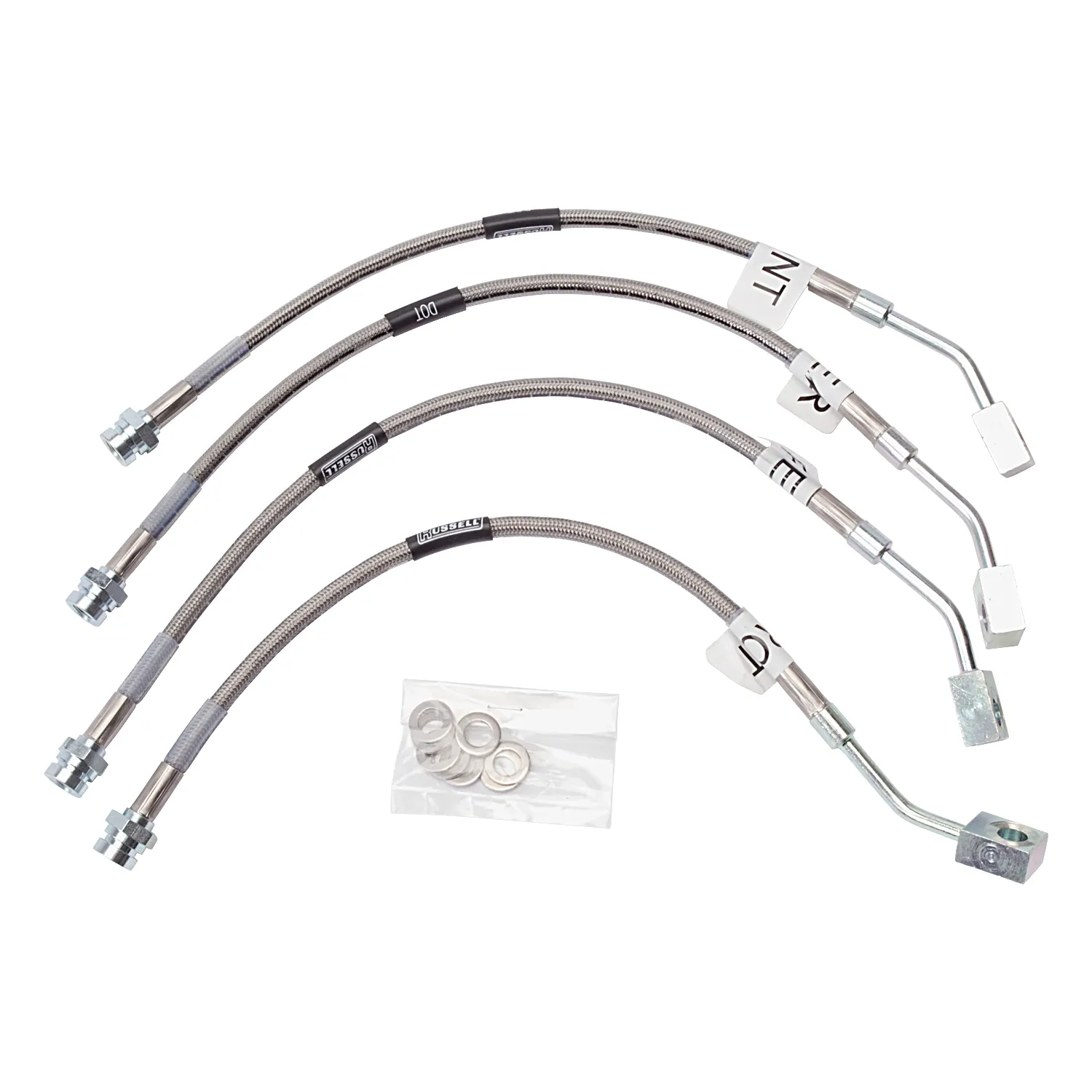
Russell 692190 stainless brake line kit, 4 lines, 1997–2004 C5 and Z06
Four DOT-marked braided stainless hoses, listed by Russell for every C5 including the Z06. Worth it when the old rubber hoses are due anyway.
Check price on Amazon (opens in new tab) Paid link
Section 08
Rung 5: cooling ducts
Fixes: front brakes that overheat on track. Difficulty: fiddly; one owner’s install took about 6 hours. Cost: about $496 for LG Motorsports’ LG5BC kit (priced as a pair) at AmericanMuscle, as of October 2026.
“Proper brake cooling is not a luxury on the track,” one owner wrote in a thread about a cracked rotor, and GM agreed in its own way: the Z06’s rear rocker scoops exist to cool the rear brakes. For the fronts, a kit pairs a plate on the back of each spindle with a hose from the bumper’s duct. Heat cracks on his rotors pushed one owner to fit a set (opens in new tab): the plates and openings needed trimming and the hose sizes didn’t match, though a Z06 owner in the same thread says his plates fit perfectly. Another owner’s hose rubbed the inside of the wheel or pulled off at full lock, so check the steering lock to lock after fitting.
Ducts only make sense for a car that already runs track pads, fresh high-temperature fluid and plain rotors and still runs hot. There’s no budget version worth naming.
Section 09
Rung 6: bigger rotors and big brakes
This is the top of the ladder, where costs jump and wheels start to matter.
C6 Z51 front rotors on stock calipers
Owners in one 2022 CorvetteForum thread (opens in new tab) report that every C5 and the base C6 (2005–2013) share brake dimensions, while the rotors of the C6’s Z51 performance package are 0.5 inch larger up front and 1 inch larger at the rear. The 13.4-inch Z51 fronts fit the stock C5 front calipers with the C6 Z51 front caliper bracket, GM 88964166 (OEM; one owner’s part number), and the pad area stays the same. They suggest a plain rotor such as Centric 125.62086 (aftermarket) over GM’s cross-drilled Z51 rotors. Blanks are hard to find; DBA 4000 slotted rotors ran about $180 each in 2022. Another owner calls the half-inch gain negligible. It’s one thread’s report, so confirm fitment before buying.
C6 Z06 calipers
The C6 Z06 swap looks the part, and wheels decide whether it fits. Owners in one 2020 thread say it takes 18-inch front wheels “and then it’s luck.” One who did it on a 2001 and a 2004 Z06 says the 2002–2004 Z06 wheels clear the front calipers with “just (and I mean just) enough clearance” (opens in new tab), and 18-inch Alcoa Z06 wheels clear with more room. A 2002 owner did it with C6 Z06 wheels and brackets; a used set of four calipers was quoted at $750 in 2008. C6 Z06 rear calipers won’t work on a C5’s front. Owners split on whether the swap brakes better or just looks better, and no test data settles it.
Aftermarket big brake kits
Wilwood, StopTech, Alcon and AP Racing all sell front kits for the C5. Wilwood’s C5 Superlite 6R kit (opens in new tab) uses 13.06- or 14.00-inch rotors, bolts on and works with the factory ABS and master cylinder, and Wilwood lists it as compatible with 2000–2004 standard and Z06 wheels (1997–1999 wheels aren’t named). With the 14-inch rotors, it says 18-inch or larger wheels are usually required. Wilwood’s AERO6 front kit, 140-15705 (aftermarket), with 14-inch slotted rotors, runs about $2,687 at AmericanMuscle, as of October 2026.
Fixes: fade that survives every rung before this one. Difficulty: a serious job, after a wheel-clearance check. This site’s call: big brakes are for a car that already fades on track with track pads, high-temperature fluid, plain rotors and ducts. The budget alternative is the Z51 rotor swap.
Section 10
Where most owners should stop
This is the site’s judgment, built on the GM documents and owner consensus across this guide. America’s sports car came with brakes that suit it, and the cheap rungs do most of the work.
- Street car: stop after fresh fluid (GM’s DOT 3 is right) and a good set of pads, matched front and rear. Add new hoses if the originals are still on.
- Occasional track day: owners prepping for a first one say “most will have no issues running stock,” with pads at least half there, a flush with new fluid and the lug nuts torqued. Add a high-boiling DOT 4 and crossover pads like the HP+, and burnish them first.
- Regular track car: add real track pads, a flush before every event, plain rotors, then cooling ducts.
- Big brakes: only once all of that still fades, session after session. Check wheel clearance first.
What each rung costs, in parts:
| Rung | What it fixes | Approximate cost | As of |
|---|---|---|---|
| 1. Fluid | Soft pedal from old fluid, boiling on track | About $25 a 500 ml bottle of racing DOT 4 | October 2026 |
| 2. Street pads | Dull pedal in hard street driving | About $375 for all four corners | October 2026 |
| 2. Track pads | Pads that fade or wear away on track | About $235 for the front axle | October 2026 |
| 3. Rotors | Worn rotors, cracking on track | Varies by brand | |
| 4. Lines | Spongy pedal from old rubber hoses | About $150 for a four-line stainless kit | October 2026 |
| 5. Ducts | Front brakes overheating on track | About $496 for a pair | October 2026 |
| 6. Bigger rotors | A cheap size step on stock calipers | About $180 a rotor | 2022 |
| 6. Big brakes | Fade that survives every rung before | About $2,700 for a front kit | October 2026 |
The parts named in this guide:
| Rung | Part | Part number | OEM or aftermarket |
|---|---|---|---|
| 1. Fluid | Motul RBF 600 (track) or Delco Supreme 11 DOT 3 (street) | GM 12377967 for the DOT 3 | Aftermarket (Motul), OEM (Delco) |
| 2. Street pads | Hawk HPS, front and rear | HB247F.575, HB248F.650 | Aftermarket |
| 2. Track pads | Hawk HP+, front | HB247N.575 | Aftermarket |
| 3. Rotors | Plain (blank) or slotted rotors | Varies | OEM or aftermarket |
| 4. Lines | Russell stainless kit, 4 lines | 692190 | Aftermarket |
| 5. Ducts | LG Motorsports brake cooling kit | LG5BC | Aftermarket |
| 6. Bigger rotors | C6 Z51 front caliper bracket plus 13.4-inch rotors | GM 88964166 (one owner’s report) | OEM bracket |
| 6. Big brakes | Wilwood AERO6 front kit | 140-15705 | Aftermarket |
Climb only as far as the car is actually driven, and put the change toward track days. That’s where a C5 shows what it is.
Section 11
Frequently asked questions
What brake fluid does a C5 Corvette use?
GM calls for DOT 3 in every C5 owner's manual from 1997 to 2004: Delco Supreme 11, GM 12377967 (OEM), or an equivalent DOT 3, new from a sealed container (1997 manual, p. 265). Many owners who take the car on track switch to a high-boiling DOT 4 racing fluid and flush the old fluid out completely. That's owner practice and this site's call for track cars, not GM's spec.
Are C5 and C6 brake rotors the same?
Owners report that every C5 and the base C6 share brake dimensions. The C6 Z51 rotors are larger, 0.5 inch up front and 1 inch at the rear, and owners in one CorvetteForum thread fit the 13.4-inch Z51 fronts to stock C5 calipers with the C6 Z51 front caliper bracket, GM 88964166 (OEM, one owner's part number). The C6 Z06 system is bigger again and needs bigger wheels.
Will C6 Z06 brakes fit under C5 wheels?
Usually only with 18-inch front wheels, and even then owners call it luck. One owner who fitted them to a 2001 and a 2004 Z06 says the factory 2002–2004 Z06 wheels only just clear the front calipers, and 18-inch Alcoa Z06 wheels clear with more room. Check clearance before buying anything.
Why do my C5 Z06 brakes squeal and make so much dust?
GM says they should. The Z06's high-performance front pads 'will normally exhibit some low speed noise' and more brake dust, by the 2004 owner's manual and GM bulletin 070303 for 2002–2004 cars. It's normal, not a fault.
Section 12
Sources
- 2004 Corvette owner's manual (GM) files.zipcorvette.com The site's hosted copy. Break-in (PDF p. 75), ABS light (p. 153), DOT-3 fluid, don't top off, mineral oil and paint cautions (pp. 279–280), pads, Z06 linings and axle sets (p. 281), approved GM parts (p. 282), wheel nuts and pulsation (pp. 312, 341), maintenance schedule (pp. 347–349), recommended fluids (p. 354).
- 1997 Corvette owner's manual (GM) files.zipcorvette.com DOT-3, Delco Supreme 11,
GM 12377967, sealed container (PDF p. 265); wheel nut torque (p. 305); brake inspection (p. 324). The 1998–2002 manuals carry the same DOT-3 wording. - 2003 Corvette owner's manual (GM) files.zipcorvette.com Z06 high-performance front linings (PDF p. 267).
- 2001 Corvette GM Heritage Center vehicle information kit files.zipcorvette.com Rotor sizes for coupe, convertible and Z06, ABS (PDF p. 24). The 1997, 1998 and 1999 kits give the same metric rotor size and the caliper layout.
- 2002 Corvette GM Heritage Center vehicle information kit files.zipcorvette.com Rotor sizes in inches and millimeters (PDF p. 12).
- GM 2001 Corvette specifications (via Corvette Action Center) (opens in new tab) corvetteactioncenter.com Rotors, Bosch 5.3 ABS, electronic rear proportioning, Active Handling.
- GM 2001 Corvette overview release (via Corvette Action Center) (opens in new tab) corvetteactioncenter.com Z06 rear brake cooling scoops and red calipers.
- NHTSA owner complaints, 2000 Chevrolet Corvette (opens in new tab) api.nhtsa.gov One query per model year, 1997–2004, pulled 2026-10-25; change the year in the address for the others. Counts are distinct complaint numbers; the brake and keyword counts are this site's.
- NHTSA recalls, 1997 Chevrolet Corvette (opens in new tab) api.nhtsa.gov Recalls for 1997–2004 pulled 2026-10-25: none concerns the brakes.
- NHTSA manufacturer communications (TSB) file, received 2000–2004 (opens in new tab) static.nhtsa.gov Filtered to Chevrolet Corvette 1997–2004: GM bulletins 070303, 070801, 010522002 and 01657.
- NHTSA manufacturer communications (TSB) file, received 2005–2009 (opens in new tab) static.nhtsa.gov GM bulletin 04086 (2004 rear brake line routing).
- NHTSA manufacturer communications (TSB) file, received 2010–2014 (opens in new tab) static.nhtsa.gov GM bulletins PIC-5368 (braided lines and ABS/TCS codes) and PIC-5391. Bulletin PIT4907A (rotor coating, 2017) is in NHTSA's later TSB files.
- Motul RBF 600 Factory Line technical data sheet (opens in new tab) azupim01.motul.com Dated September 2025. Boiling points, DOT 4 minimums, compatibility and mixing.
- Hawk Performance: HPS front pads HB247F.575 (opens in new tab) hawkperformance.com Read 2026-10-25, with the HB248F.650 rear and HB247N.575 HP+ pages: fitment, compound descriptions and list prices.
- Russell Performance: 692190 brake line kit (opens in new tab) russellperformance.com Fitment and list price, read 2026-10-25.
- Wilwood: C5 Corvette Superlite 6R front brake kit flyer (opens in new tab) wilwood.com Rotor sizes, ABS and master cylinder compatibility, wheel fitment, the factory front rotor size.
- AmericanMuscle: Wilwood AERO6 front big brake kit 140-15705 (opens in new tab) americanmuscle.com Price read 2026-10-25.
- AmericanMuscle: LG Motorsports Corvette brake cooling kit LG5BC (opens in new tab) americanmuscle.com Price for a pair, read 2026-10-25.
- CorvetteForum: track days (C5 first track day prep) (opens in new tab) corvetteforum.com February 2009.
- CorvetteForum: track pads (opens in new tab) corvetteforum.com November 2007.
- CorvetteForum: brake pads (opens in new tab) corvetteforum.com April 2006.
- CorvetteForum: rotors (drilled, slotted or blank for HPDE) (opens in new tab) corvetteforum.com March 2013.
- CorvetteForum: rotors (drilled rotors on track) (opens in new tab) corvetteforum.com January 2010.
- CorvetteForum: brake rotors (warping and lug nuts) (opens in new tab) corvetteforum.com September 2009.
- CorvetteForum: rotors (2020 buying thread) (opens in new tab) corvetteforum.com August 2020.
- Corvette Action Center forums: track driving brakes (opens in new tab) forums.corvetteactioncenter.com November 2002. Cracked OE rotors on a 2001 Z06 with race pads.
- CorvetteForum: C5 rotors (opens in new tab) corvetteforum.com January 2012. ACDelco rotors for a street car.
- CorvetteForum: cracked rotor (opens in new tab) corvetteforum.com July 2003. Brake cooling on track.
- CorvetteForum: brake lines (opens in new tab) corvetteforum.com January 2018.
- CorvetteForum: brake lines (stainless lines and codes) (opens in new tab) corvetteforum.com December 2005.
- CorvetteForum: putting brake cooling ducts on a C5 (opens in new tab) corvetteforum.com February to March 2007.
- CorvetteForum: front brake ducts rubbing inside the rim (opens in new tab) corvetteforum.com March 2012.
- CorvetteForum: brakes (C6 Z51 rotors on a C5) (opens in new tab) corvetteforum.com October to November 2022. Source of the
GM 88964166bracket number (one owner's report). - CorvetteForum: brakes (C6 Z06 brakes on a C5) (opens in new tab) corvetteforum.com July 2020.
- Corvette Action Center forums: C6 Z06 calipers on a 2002 C5 (opens in new tab) forums.corvetteactioncenter.com July to September 2008.
- CorvetteForum: C6 Z06 rear brake calipers (opens in new tab) corvetteforum.com June 2007.
- CorvetteForum: Tech 2 bleed (opens in new tab) corvetteforum.com March 2016. Bleeding after new hoses, and the scan-tool ABS bleed.
- CorvetteForum: ABS flush (opens in new tab) corvetteforum.com November 2009. Lines opened at the ABS module.
- CorvetteForum: brake flush (opens in new tab) corvetteforum.com July 2002.
- CorvetteForum: brakes make the biggest difference to a C5 Z06 on track (opens in new tab) corvetteforum.com Undated editorial.