C5 · Buying guide
1997 Corvette buyer's guide: the first C5, its stop sale, five recalls and 2026 prices
Published
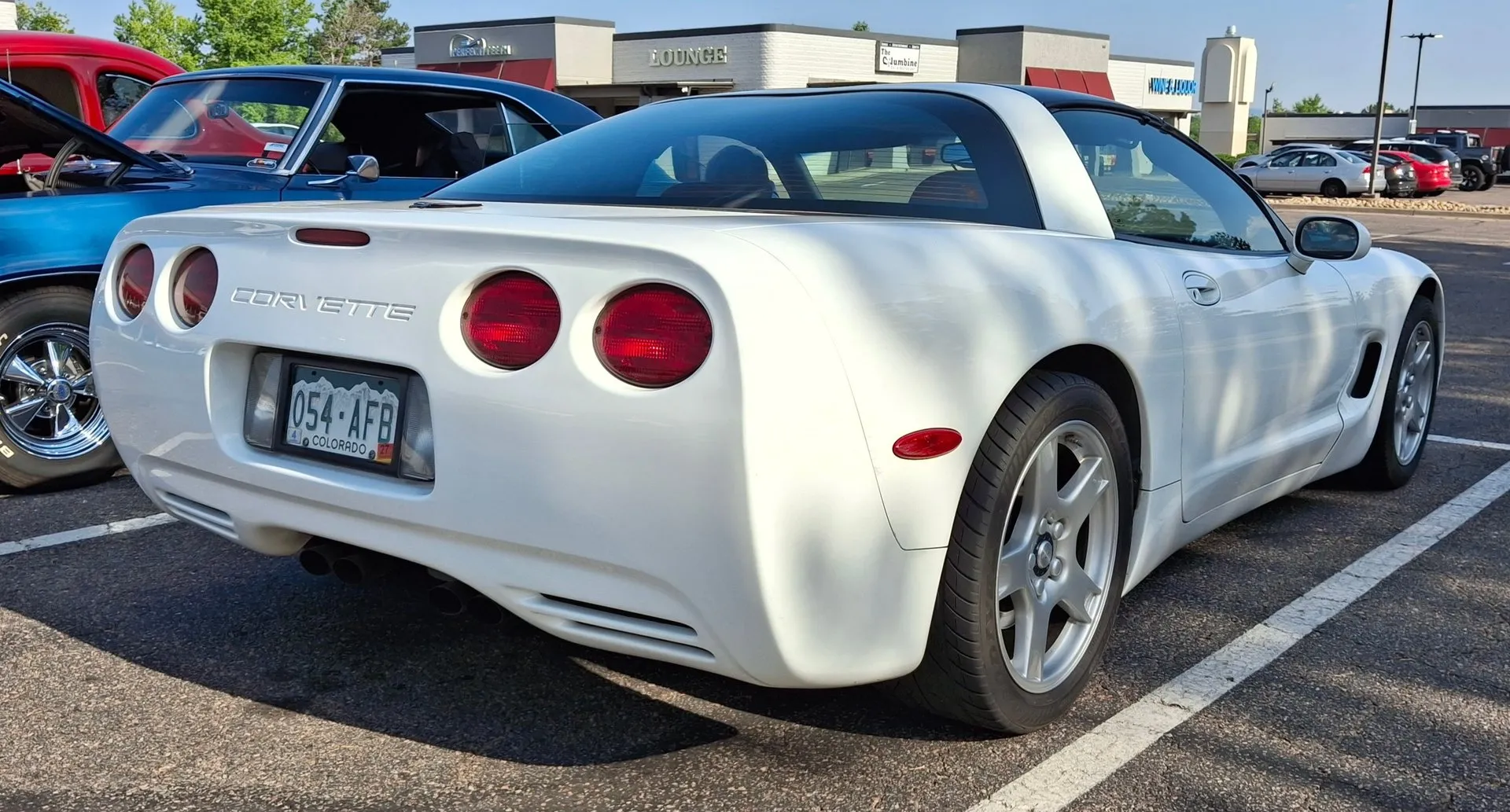
On Friday, March 7, 1997, about 400 Chevrolet dealers pulled the covers off the new Corvette. On March 20, GM issued its dealers a stop sale. The rear suspension tie rods could fracture, and 1,414 cars were recalled for new ones under recall 97V044000 (opens in new tab). NHTSA’s record gives the date of the stop sale but not how long it lasted. It was the first of three recalls the 1997 collected while it was still new.
That’s the 1997 in short: a huge leap forward that shipped with first-year faults. It was the first model year of the C5 (1997–2004), coupe only, and Bowling Green built 9,752, every one with the 5.7-liter LS1 V8, 345 hp and 350 lb-ft. So yes, a 97 Corvette is a C5, and the first. There was no 1997 convertible (that came for 1998), no Z06 (2001, as the C5 Z06 guide explains), no ZR-1 (the C4’s ended with 1995), and no C5 wore the Stingray name. The C5 buyer’s guide covers what every C5 shares; this page covers what’s particular to the first year of America’s sports car with an LS1.
C5 Key figures
- Engine
- 5.7-liter LS1 V8, 345 hp and 350 lb-ft
- Body
- coupe only, with a removable roof panel
- Built
- 9,752, all coupes
- Price new, GM
- $38,060 with destination
- GM recalls
- five, three of them for the 1997 alone
- NHTSA complaints
- 153, or 15.7 per 1,000 built
- Bring a Trailer, 2026
- 6 sold, median about $15,400
- Hagerty #3, early 2026
- $16,400 coupe, less 10 percent for an automatic
Section 01
Thirteen days in March: how the 1997 launched
GM showed the car to the public at the Detroit auto show on January 6, 1997, and announced the price the same day: $38,060 with destination, only $270 more than the 1996 coupe’s $37,790. GM’s January value release (opens in new tab) counted more than $1,200 of added standard equipment, among it Bose speakers, a low tire pressure warning, a power driver’s seat, speed-sensitive steering and run-flat tires. (GM’s March 6 release said more than $1,000.)
The January release promised the car at dealers in “late February.” It slipped. The March 6 release named “this Friday (March 7)” and “some 400 select dealerships.” An Associated Press report on launch day counted 402, the highest-volume Chevrolet stores, under 10 percent of the country’s 4,200; the rest waited for Bowling Green to catch up. The new-car manager of one Hawaii dealer told AP the whole state might see five all year.
The same Friday, AP said, Chevrolet ran its first Corvette advertising in 13 years. GM’s advertising release (opens in new tab) of March 3 describes the 1997 Corvette commercial: industrial spies watching a sports car they can’t identify, which turns out to be the new Corvette, directed by Andrew Davis of The Fugitive and shown in 2,600 movie theaters as well as on TV. The magazine insert was dressed as a “C5 Limited Access” dossier.
Thirteen days after the unveiling came the stop sale. The full story is in Five recalls, from the stop sale to the column lock.
Section 02
All new from the frame up, and what it still lacked
GM’s 1997 product guide calls it “available in one body style: Corvette Coupe,” a two-seat hatchback (kit, PDF page 10). Every 1997 is that car: coupe only, with a removable roof panel. Almost nothing carried over from the 1996 C4:
- The structure. Hydroformed side rails, each one piece where the C4 used 14 parts, a closed tunnel down the middle and a floor of composite over a balsa core. Car and Driver reported the structure four times as stiff as the C4’s, and GM put the car at 69 lb lighter than a 1996.
- The layout. The transmission moved to the back, joined to the engine by a torque tube, with two fuel tanks ahead of the rear axle. The wheelbase grew 8.3 inches.
- The shape. A drag coefficient of 0.29, against 0.34 for the C4, by Car and Driver’s figures. GM called it the second-lowest drag of any mass-produced car in North America, after its own EV1.
- The cargo. About 25 cubic feet behind the seats, roughly double the C4’s, and the roof panel came off with three hand latches instead of four bolts.
- The tires. Goodyear Eagle F1 GS Extended Mobility run-flats, P245/45ZR-17 front and P275/40ZR-18 rear, good for 200 miles at 55 mph with no air, GM said. No spare.
Every 1997 has a tire pressure monitor, keyless entry, traction control (GM’s ASR) and a limited-slip axle as standard (kit, PDF page 5).
What a 1997 can’t have. The 1998 added the convertible, Active Handling (JL4), magnesium wheels and two paints. The 1999 added the fixed-roof hardtop, a head-up display and a telescoping column.
Section 03
The LS1 and GM’s numbers for 1997
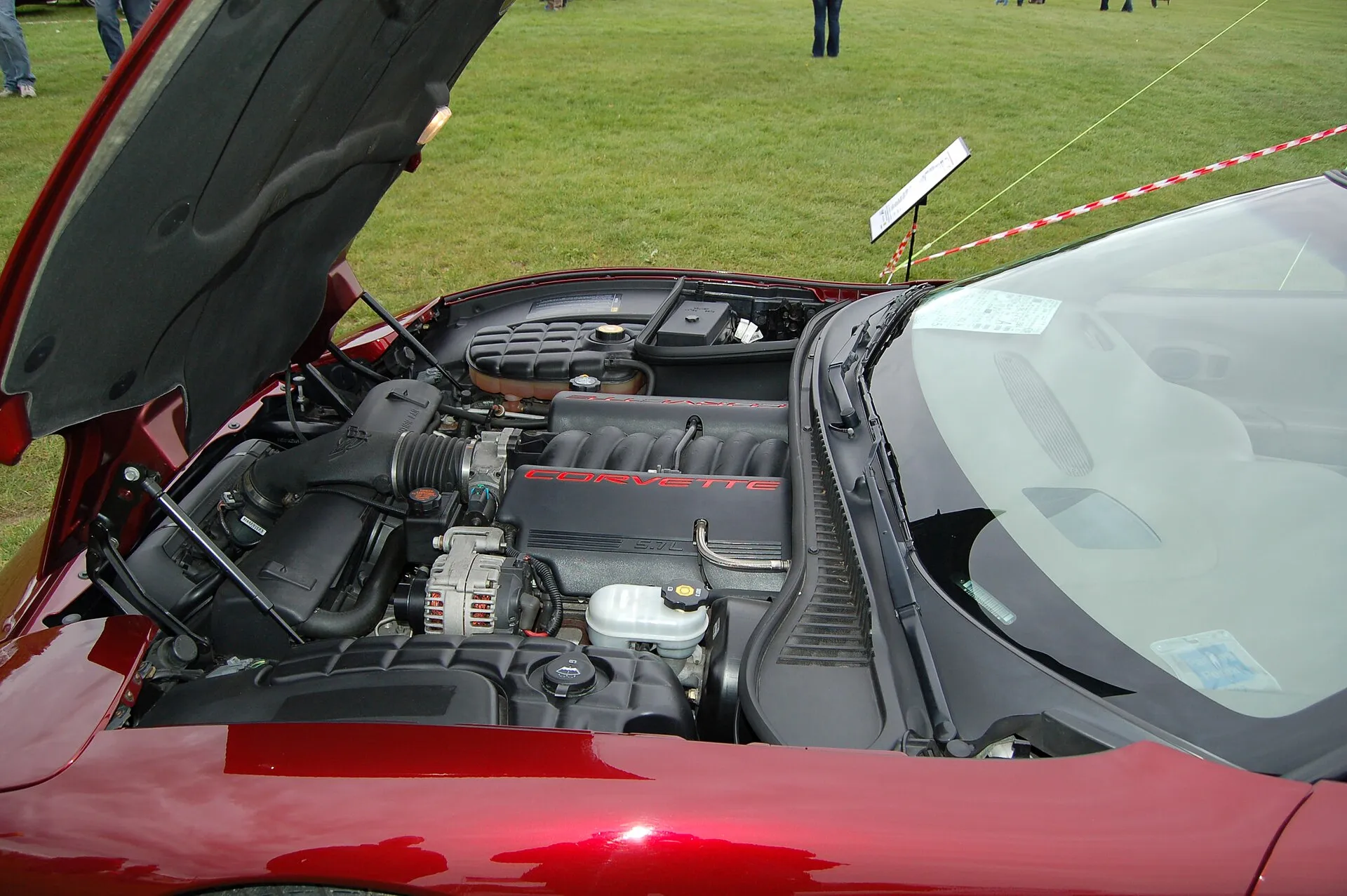
The LS1 was GM’s new small-block: aluminum block and heads, 346 cubic inches (5.7 liters), pushrods and two valves per cylinder, 10.1:1 compression and a 6,000 rpm redline. GM’s launch book set it beside the two 1996 engines it replaced: the LT1’s 300 hp, the optional LT4’s 330 hp and the LS1’s 345 hp at 5,600 rpm with 350 lb-ft at 4,400 (kit, PDF page 20). GM Powertrain called it GM’s first passenger car engine with electronic throttle control (kit, PDF page 47): no cable from the pedal, just a sensor and a throttle actuator control (TAC) module. Remember that module. It comes back in The 1997’s trouble spots.
| 1997 Corvette | Figure |
|---|---|
| Engine | LS1 5.7-liter V8, 345 hp at 5,600 rpm, 350 lb-ft at 4,400 rpm (SAE net) |
| Automatic (standard) | Four-speed 4L60-E: 3.06, 1.63, 1.00, 0.70; 2.73 axle, or 3.15 (G92) |
| Six-speed (MN6, $815) | Borg-Warner T56: 2.66, 1.78, 1.30, 1.00, 0.74, 0.50; 3.42 axle |
| Curb weight (GM, preliminary) | 3,229 lb automatic, 3,218 lb manual |
| Wheelbase, length, width, height | 104.5, 179.7, 73.6 and 47.7 in |
| Fuel | 19.1 gal (72.3 L) in two tanks; 91 octane or higher |
| Oil | 6.5 qt (6.1 L) with filter, changed at no more than 10,000 miles |
| Coolant | 12.6 qt automatic, 12.9 qt manual |
| Wheel nuts | 100 lb-ft (140 N·m) |
| EPA, today’s method | 16 city, 24 highway, 19 combined (automatic); 16, 25 and 19 (six-speed) |
The engine and gearbox figures are GM’s specification page (kit, PDF page 41); the capacities and torque are from the owner’s manual, which gives more coolant than GM’s preliminary spec sheet; the mileage is from fueleconomy.gov.
0–60 and top speed. GM’s figures: 0–60 mph in 4.72 seconds with the six-speed and 5.05 with the automatic, the quarter mile in 13.36 seconds at 109.4 mph, and 172 mph (kit, PDF page 42). Car and Driver’s February 1997 test (opens in new tab) of a preproduction six-speed ran 4.9 seconds to 60 and 13.4 at 108 mph, and a GM engineer told the magazine he’d seen 175 mph at the test track. Its best LT1 C4 had run 13.6 at 104. That’s the C5’s case in one line: one model year after the last C4, clearly quicker, for $270 more.
Section 04
Bowling Green’s 9,752, option by option
The usual count is 9,752, all coupes, from Bowling Green’s figures as Corvette Action Center’s production page (opens in new tab) gives them; the C5 guide rounds it to about 9,750. That page also shows 9,772 in one row, notes that its total includes pilot and prototype cars, and ends its VIN range at serial 109707. Its gearbox, suspension, color and interior counts each add up to 9,752, so that’s the figure here. Of those, 426 went for export (325 to Canada, 46 to Mexico), and nine buyers took delivery at the National Corvette Museum.
GM’s order guide prints no option prices; these are Corvette Action Center’s. Shares are this site’s arithmetic on 9,752.
| Code | Option | Price | Built | Share |
|---|---|---|---|---|
| MN6 | Six-speed manual | $815 | 2,809 | 29% |
| M30 | Four-speed automatic | standard | 6,943 | 71% |
| G92 | 3.15 performance axle, automatic only | $100 | 2,739 | 39% of automatics |
| F45 | Selective Real Time Damping | $1,695 | 3,094 | 32% |
| Z51 | Performance handling package | $350 | 1,077 | 11% |
| CJ2 | Dual-zone air conditioning | $365 | 7,999 | 82% |
| AQ9 | Adjustable sport leather seats | $625 | 6,711 | 69% |
| AAB | Memory package | $150 | 6,186 | 63% |
| UN0 | Delco Bose stereo with CD | $100 | 6,282 | 64% |
| U1S | 12-disc CD changer | $600 | 4,496 | 46% |
| CC3 | Blue transparent roof panel | $650 | 7,213 | |
| C2L | Both roof panels, solid and transparent | $950 | 416 |
Two things stand out. Seven in ten 1997s are automatics, so a six-speed takes some finding. And only 1,077 cars have the Z51, GM’s package “for the gymkhana/autocross enthusiast,” with stiffer springs and stabilizer bars; F45 instead adjusts the shocks on the move, and the two couldn’t be combined (kit, PDF page 7). Corvette Action Center also counts 2,078 cars with only the body-color roof; its three roof counts sum to 9,707, not 9,752, so they’re approximate. The 1,753 cars without dual-zone air kept the standard manual system.
Seven paints, three interiors (kit, PDF page 8):
| Paint (GM code) | Built | Share |
|---|---|---|
| Torch Red (70U) | 3,026 | 31% |
| Black (41U) | 2,393 | 25% |
| Sebring Silver Metallic (13U) | 2,164 | 22% |
| Arctic White (10U) | 1,341 | 14% |
| Light Carmine Red Metallic (53U) | 381 | 4% |
| Nassau Blue Metallic (23U) | 292 | 3% |
| Fairway Green Metallic (87U) | 155 | 2% |
Fairway Green is the rare one: 155 cars. Corvette Action Center’s production table prints its code as 91U, but GM’s order guide and the same site’s spec page say 87U. Inside, 6,481 cars got black leather, 2,543 Light Gray and 728 Firethorn Red.
Section 05
Five recalls, from the stop sale to the column lock
NHTSA lists more GM recalls for the 1997 than for any other C5 year: five, three of them for the 1997 alone. Those three were filed between March and June 1997, and owner letters for all three had begun by July:
- 97V044000, rear tie rods (1,414 cars). The rear suspension tie rod assembly could fracture, with a possible loss of control. NHTSA’s file records that GM issued a stop sale to its dealers on March 20, 1997; owner letters began March 31, and dealers replaced both rear tie rod links.
- 97V104000, seat belt retractors (4,369 cars). The belts’ energy management loop couldn’t absorb the necessary forces, so the cars didn’t conform to the federal occupant crash protection standard, FMVSS 208. Dealers replaced both front retractor assemblies.
- 97V105000, fuel tank seal (3,792 cars). A torn seal on the fuel sending unit and pump could let fuel smell or leak, with a fire risk near an ignition source. Dealers replaced both tank assemblies, sender and pump included.
- 00V111000, lap belts (1997–2000, 71,569 cars). The lap belt webbing could twist and jam in the retractor; dealers fitted inserts at each retractor’s web guide, with owner letters from November 13, 2000.
- 04V060000, the column lock (1997–2004, 126,624 cars). With low or interrupted voltage, the car could be driven with the steering locked, and the lock pin could touch the plate while driving. Automatics had the lock plate removed; manuals got new engine computer programming, a check and a new plate if needed.
The 1997 went to the front of the line for the last one, and the back. NHTSA’s notes say letters to owners of 1997 automatics began April 26, 2004, before any other C5, and GM’s bulletin 04006, dated April 19, 2004, says the 1997 model year would be released in phase 1 “due to parts availability.” Owners of 1997 and 1998 manuals were to be notified later in 2004, when parts were available. Either 1997 gearbox is in the recall.
That came three years late for some owners. GM’s 2001 customer service campaigns for columns that wouldn’t unlock, 1044 and 1044A, covered certain 1998–2000 cars and left the 1997 out, NHTSA’s investigation EA02-031 records, and at least six 1997 owners complained to NHTSA about it between 2001 and 2004. EA02-031 found failures in 1997–2003 cars the campaigns hadn’t covered, and closed with the 2004 recall.
Section 06
153 complaints on 9,752 cars
On October 22, 2026, NHTSA’s file (opens in new tab) held owner complaints against the 1997: 153, or 15.7 per 1,000 built, the highest rate of any C5 year. Two are flagged as crashes, one reports an injury, none a death. Most were filed from 2000 to 2003, the column-lock years. With the column lock left out, the 1997 is still at 9.7 per 1,000, the worst of the run, as the years-to-avoid guide says.
| 1997 | 1998 | 1999 | |
|---|---|---|---|
| Built | 9,752 | 31,084 | 33,270 |
| Complaints | 153 | 399 | 308 |
| Per 1,000 built | 15.7 | 12.8 | 9.3 |
| Column lock | 58 | 142 | 128 |
| Reduced power or sudden power loss | 11 | 5 | 0 |
| Seat belts | 8 | 21 | 18 |
| Brake module | 0 | 9 | 11 |
The themes are this site’s approximate keyword counts of the complaint text, and one complaint can hit several. The power-loss rule is broad: a stricter reading, counting only cars that slowed or went into limited power, gives 10 for the 1997 against 2 or 3 for the 1998. Either way, a year with under a third of the 1998’s production filed more than twice as many. That’s the 1997’s own theme, and it has a GM bulletin behind it.
Section 07
The 1997’s trouble spots
Plenty of 1997s have been fine. In a 2002 thread one owner reported no trouble at 46,000 miles, and another a 1997 still running at 107,000. These are the places to look.
Reduced engine power and the throttle module
The owner’s manual explains the message: REDUCED ENGINE POWER, with chimes and the CHECK ENGINE light, means a noticeable drop in performance; the car can be driven at reduced speed, and should see a dealer soon (owner’s manual, PDF page 141). In the complaint file, several 1997 owners describe it, often with SERVICE TRACTION SYSTEM, as a car that suddenly slowed to 5 to 20 mph on a freeway. Those are owner statements, not NHTSA findings.
GM’s bulletin 87-65-16 (opens in new tab), for 1997–1998 cars, covers that message with trouble code P1516 or P1518, or P1125 with P1276, P1281 or P1286. It blames the TAC module’s diagnostic software and calibration, and if normal diagnosis doesn’t find the fault, the fix is a new module, GM 25319443 (OEM). It doesn’t apply when P1516 comes with P1120 or P1220: those go through normal diagnosis. A GM technician wrote in 2002 that the TAC modules had been revised many times.
The column lock
Fifty-eight of the 153 complaints mention it. SERVICE COLUMN LOCK on the dash means the steering may not unlock, and the manual says to have the car towed to a dealer (PDF page 140). Before the recall, 1997 owners reported paying $418 to about $600 a time for column repairs in 2000 to 2002 complaints. GM’s later special policy and the aftermarket bypass modules are on the C5 guide; on a 1997, ask for proof of 04V060000 and what’s been done since.
The early brake module
Every 1997 has the early electronic brake control module (EBCM), the computer behind the ABS and traction control, and on 1997–2000 cars it generally can’t be repaired. Owners put a used unit at over $1,000 in 2021. No 1997 complaint is mainly about it, though one owner lists it among modules replaced twice. Lit ABS and traction lights should come off the price; the years-to-avoid guide sets out the ways out.
Battery acid, fuel and the smaller items
- Battery acid. The battery sits over the engine computer and wiring, and owners warn that a leaking one eats both. One 2003 complaint put the repair at $3,000 to $4,000. Pull the battery and look; the battery guide shows where it is.
- Fuel smell. Eight complaints, among them a left tank leaking again two years after both were replaced under 97V105000, and a fuel smell in the cabin from a sender gasket.
- Seat bolsters. Bulletin 990850010 covers premature wear on cars built before VIN X5116322: every 1997.
- Automatics. Bulletin 010730023 covers a harsh 1–2 upshift and a check engine light with P1870 on automatics built before January 15, 1999: every 1997 automatic.
- Fuel pump whine on cars built before an early VIN breakpoint (836310A, 1997–1998), and a fuel gauge that reads empty (010604022, 1997–2000).
- Bulletins for the 1997 alone, among them water dripping into the rear compartment after the hatch is opened (731055), air that won’t change temperature (731103), a CLN light on the radio that won’t go out (549001A) and a blower that runs after the key is off (98831110).
- The roof panel. Two complaints describe a transparent panel crazing and a roof panel separating at the edge.
The harmonic balancer, headlight motors and the rest every C5 shares are on the C5 guide.
Section 08
Telling a 1997 from the C5s after it
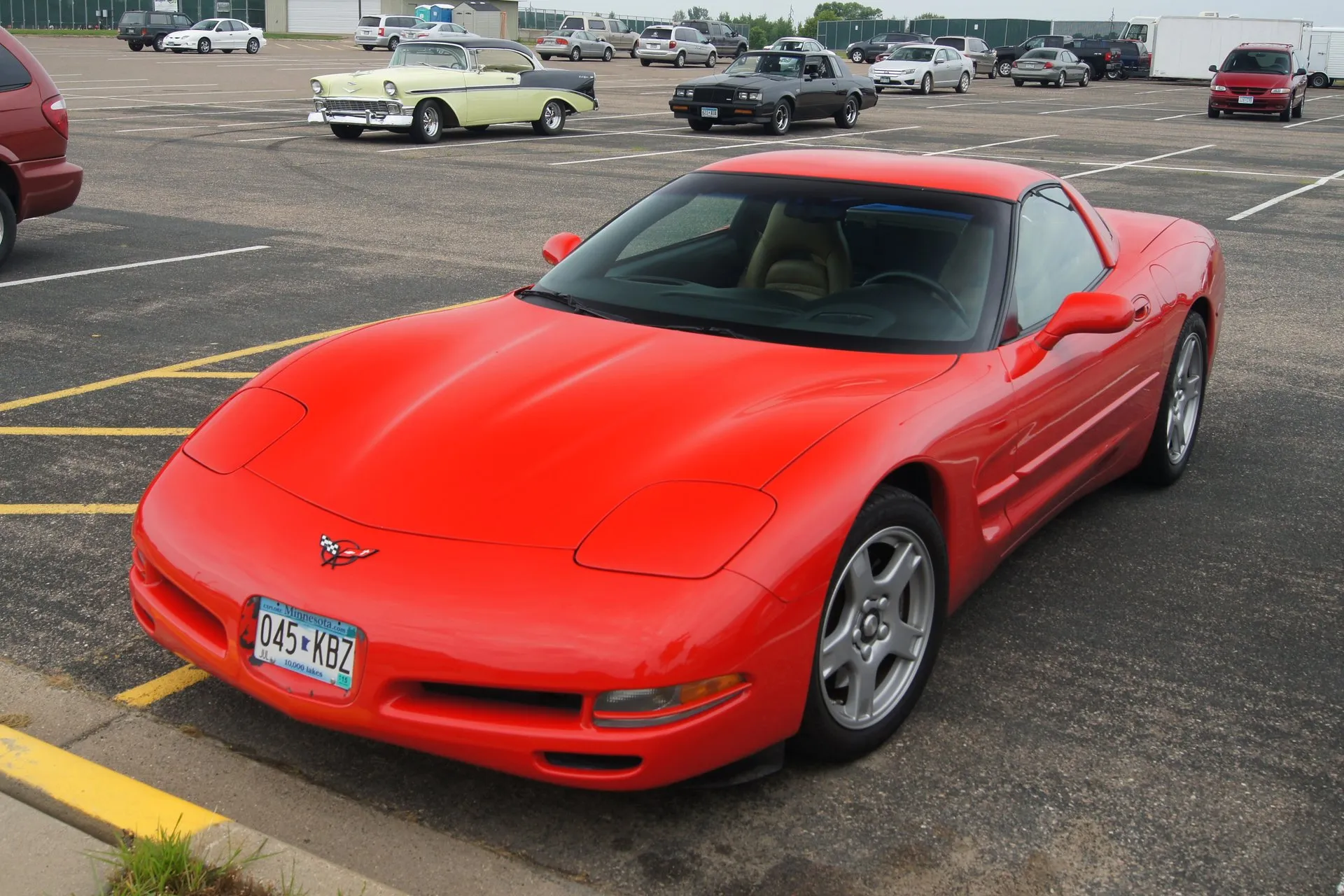
From the outside, a 1997 coupe looks like a 1998 or 1999 coupe, down to the wide-spoke wheels. The paper settles it.
The VIN is on a plate at the driver’s end of the dash, readable through the windshield (owner’s manual, PDF page 295). A 1997 reads 1G1YY22G, a check digit, then V5 and six digits: the sixth character is 2 for a coupe (a 3, for a convertible, is impossible on a 1997), the eighth G for the LS1, the tenth V for 1997 and the eleventh 5 for Bowling Green. Corvette Action Center gives the 1997 serials as 100000 to 109707 and the engine suffix codes as ZYC for manuals and ZYD for automatics; its 1998 codes swap the pattern, so don’t build a rule on them.
The option label isn’t in the glovebox. The manual puts the Service Parts Identification label on the cover of the rear left-hand storage compartment, behind the seats. It lists the VIN, the paint and every production option, so it’s the proof of MN6, Z51 or F45, G92 and CC3.
What rules out a 1997: a convertible or hardtop body; Active Handling, magnesium wheels or a head-up display; Light Pewter, Medium Purple Pearl or Magnetic Red paint; Light Oak leather; a Pace Car package. A seller offering a 1997 with any of those has a later car or an added part. A Fairway Green 1997 is real, and rare.
Section 09
Checks for a 1997 before money changes hands
- Recall proof for all five, by VIN at a Chevrolet dealer: tie rods, retractors, fuel tanks, lap belts and the column lock.
- The column lock. Start and stop the car several times with the key fully out between, and ask what was done after the recall and who fitted any bypass.
- The Driver Information Center. Look for REDUCED ENGINE POWER, SERVICE TRACTION SYSTEM or SERVICE COLUMN LOCK on start-up and after a long drive, and have the stored codes read. P1516 or P1518 points to the throttle module.
- ABS and traction lights out after start-up and after a real drive. If either stays lit, price in a used module.
- The battery tray. Lift the battery and look for corrosion on the tray, the harness and the computer beneath.
- Fuel smell in the cabin or around the tanks, especially near the left tank.
- The option label in the left rear compartment against the ad, especially for a six-speed or Z51.
- The roof panel. Lift it off with the three latches, look for crazing on a transparent one and check the seals for leaks.
- The driver’s seat and bolster. Rock the seat and brake hard to feel for movement.
- Shifts on an automatic, especially 1–2, with no check engine light.
- Tires. No spare, so a car on ordinary tires needs a plan for a flat.
- A C5 specialist’s inspection and every record the seller has. A 1997 is nearly 30 years old now; the folder matters more than the miles.
Section 10
1997 prices: six 2026 sales and Hagerty
How much is a 1997 Corvette worth? From January 1 to October 21, 2026, Bring a Trailer (opens in new tab) sold six stock 1997s, all coupes, for $8,100 to $23,500. That’s 6 sold, median about $15,400, by this site’s count. None sold there between late October 2025 and late April 2026, so the last 12 months are the same six cars.
| 1997s sold, Jan. 1 to Oct. 21, 2026 | Price | Date |
|---|---|---|
| Coupe | $8,100 | April 29 |
| Coupe, 49,000 miles | $14,300 | June 12 |
| Coupe, 13,000 miles | $17,500 | June 18 |
| Coupe, six-speed, 4,700 miles | $23,500 | June 29 |
| Coupe, 25,000 miles | $16,555 | July 2 |
| Coupe | $10,250 | September 15 |
Before that, an 11,000-mile six-speed sold for $18,500 in January 2025. Six sales is a small sample, and auction cars skew clean and low-mile. For scale, nine stock 1998s sold for a median of $16,500 in 2026 (two Pace Cars among them) and four 1999s for $24,000.
Hagerty’s valuation tool (opens in new tab), in an archive copy of February 7, 2026, valued a 1997 in #3 (Good) condition at $16,400 coupe, less 10 percent for an automatic, the same coupe figure as a 1998 or 1999. CorvetteForum’s editors put higher-mile 1997–2000 automatics at $15,000 to $22,000 in July 2026. No classic.com figure for the 1997 alone could be read. These are past sales and valuations, not a forecast.
Section 11
Buy a 1997 for being first, at a 1997 price
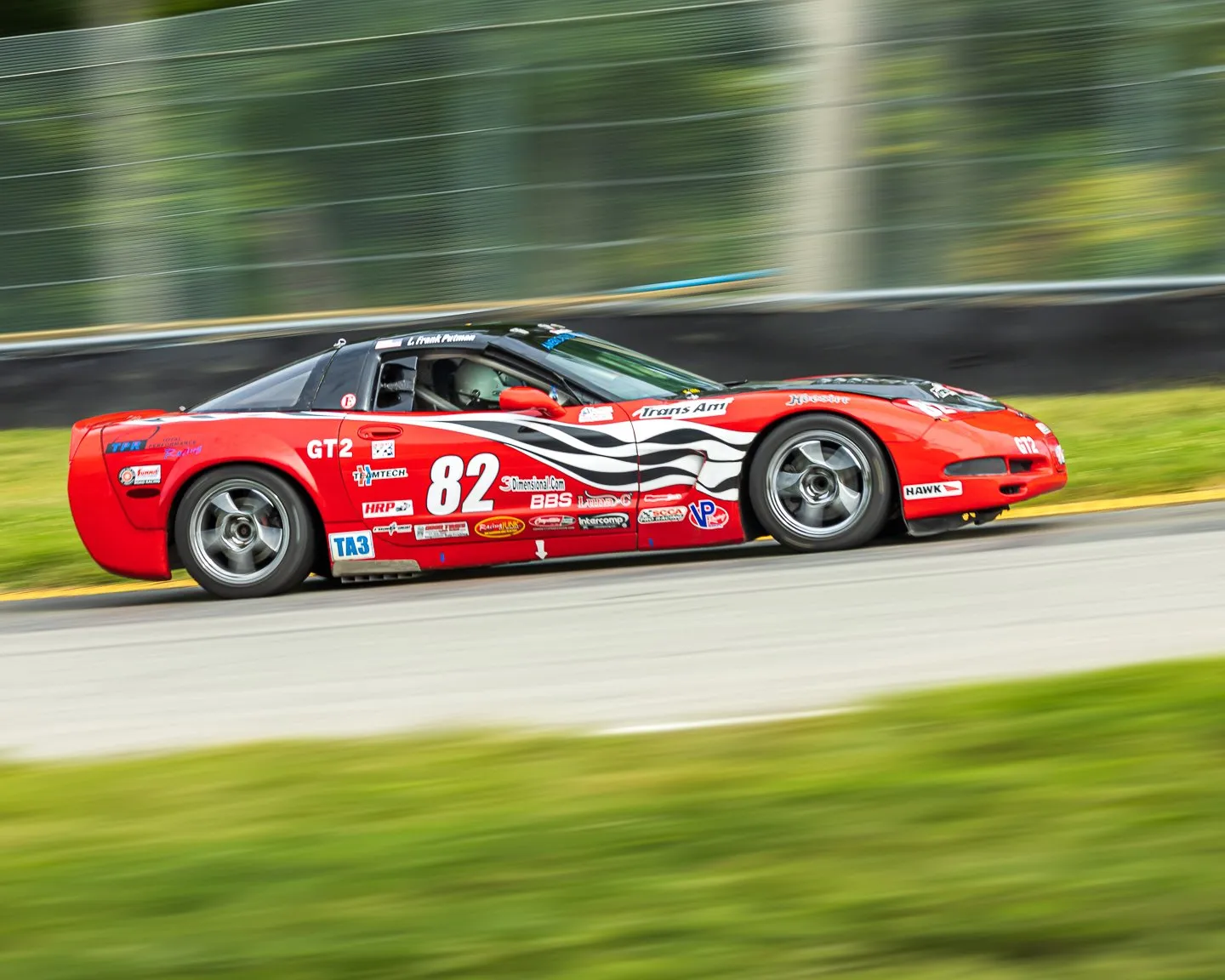
On the record, the 1997 is the C5’s roughest year: the highest complaint rate, five recalls, the power-loss bulletin and an early brake module that’s no longer made. The C5 guide’s rule stands: skip a 1997 unless the price makes up for its recall history. What the numbers can’t show is how good the car was from day one: a 345 hp aluminum V8, a stiff new structure and 172 mph for $38,060. On 2026’s auction results, a 1997 brings well under half that sticker.
The one to buy is a six-speed with paperwork for all five recalls and a clean code history. It’s the rarer gearbox (2,809 built), and Hagerty doesn’t take 10 percent off for it. Z51 is a bonus for a track day; Fairway Green is the rarest paint. Pay no more than a comparable 1998 coupe brings, and walk away from one with a reduced-power history and no receipt for the throttle module.
The automatic is the budget 1997. Seven in ten have one, and Hagerty values it 10 percent lower. Buy one for the price, with the ABS and traction lights dark, the battery tray clean and the column lock recall on file.
If a comparable 1999 or 2000 costs little more, buy it: the 1999 and 2000 guides make the case, and the best Corvette years guide shows where the 1997 sits among every generation. But a sorted 1997 with the records to prove it is still the car that started the LS1 era, and it sells for about what a 1998 does.
Section 12
Sources
- GM Heritage Center: 1997 Chevrolet Corvette vehicle information kit files.zipcorvette.com This site's library. The order guide published January 31, 1997: standard equipment (PDF page 5), options (7), paints, interiors and power teams (8); the product information guide: one body style (10), the LS1 against the 1996 engines (20), drivetrain and structure (13 to 28); GM's preliminary specifications: engine and transmissions (41), performance, dimensions and curb weight (42); GM Powertrain on the electronic throttle (47).
- 1997 Corvette owner's manual (GM) files.zipcorvette.com This site's library. SERVICE COLUMN LOCK and REDUCED ENGINE POWER messages (PDF pages 140 and 141), octane (238), oil change interval (250), the VIN and Service Parts Identification label (295), capacities and wheel nut torque (305).
- GM Heritage Center: 1998 Chevrolet Corvette vehicle information kit files.zipcorvette.com This site's library. What 1998 added to the C5, for comparison.
- GM press release: 1997 Corvette value, January 6, 1997 (opens in new tab) corvetteactioncenter.com Via Corvette Action Center. $38,060 including destination, $270 over the 1996 coupe's $37,790, and more than $1,200 of added standard equipment.
- GM press release: 1997 Corvette at the Detroit show, January 6, 1997 (opens in new tab) corvetteactioncenter.com Via Corvette Action Center. Wheelbase and length against the C4, the run-flat tires, the cargo space and the drag coefficient.
- GM press release: the 1997 Corvette at the Chicago show, February 7, 1997 (opens in new tab) corvetteactioncenter.com Via Corvette Action Center. The three suspensions and the one-piece hydroformed frame rail.
- GM press release: 1997 Corvette advertising, March 3, 1997 (opens in new tab) corvetteactioncenter.com Via Corvette Action Center. The spy-themed TV and cinema spots from March 7 and the print campaign.
- GM press release: the dealer debut, March 6, 1997 (opens in new tab) corvetteactioncenter.com Via Corvette Action Center. The unveiling at some 400 dealers on Friday, March 7, and more than $1,000 of added standard equipment.
- Associated Press report on the dealer launch (launch day, 1997) (opens in new tab) corvetteactioncenter.com As reproduced by Corvette Action Center, which gives no date. 402 dealers, the Hawaii allocation and the first Corvette advertising in 13 years.
- Car and Driver: 1997 Chevrolet Corvette preview test (February 1997) (opens in new tab) caranddriver.com A preproduction six-speed: acceleration, stiffness, drag, cargo, roof latches, the drive-by-wire throttle and the top-speed figures. Archive copy read October 22, 2026.
- Corvette Action Center: 1997 Corvette production and options (opens in new tab) corvetteactioncenter.com Bowling Green figures: 9,752 coupes, option prices and counts, paints, interiors and the period road tests. Shares are this site's arithmetic.
- Corvette Action Center: 1997 Corvette identification (opens in new tab) corvetteactioncenter.com The VIN range and engine suffix codes, as Corvette Action Center gives them.
- GM bulletin 87-65-16: reduced engine power message with powertrain codes (1997–1998) (opens in new tab) corvetteactioncenter.com GM's text as reproduced by Corvette Action Center; NHTSA file 98876516.
- NHTSA owner complaints, 1997 Chevrolet Corvette (opens in new tab) api.nhtsa.gov 153 complaints (167 records) on October 22, 2026; 1998 (opens in new tab) (399) and 1999 (opens in new tab) (308) pulled the same day. Theme counts and rates per 1,000 built are this site's approximate counts from the records and their text.
- NHTSA recalls, 1997 Chevrolet Corvette (opens in new tab) api.nhtsa.gov GM campaigns 97V044000, 97V104000, 97V105000, 00V111000 and 04V060000, plus two aftermarket lamp campaigns. Pulled October 22, 2026.
- NHTSA recall 97V044000: rear suspension tie rods (opens in new tab) api.nhtsa.gov 1,414 cars; GM's stop sale of March 20, 1997.
- NHTSA recall 04V060000 (GM 04006): electronic column lock (opens in new tab) api.nhtsa.gov 126,624 cars, 1997–2004; the remedy and the order in which owners were notified.
- NHTSA defect investigations, 1997 Chevrolet Corvette (opens in new tab) api.nhtsa.gov PE99-076 and EA00-009 (lap belts), PE02-054 and EA02-031 (column lockup; GM's 2001 campaigns 1044 and 1044A for certain 1998–2000 cars). Pulled October 22, 2026.
- NHTSA manufacturer communications (TSB) file, received 1995–1999 (opens in new tab) static.nhtsa.gov Filtered to the 1997 Corvette with the files for 2000–2004 (opens in new tab) and later years. GM bulletins 731055, 731103, 549001A and 98831110 (1997 only), 98876516, 836310A, 990850010, 010730023, 010604022, 020850002 and 04006 (dated April 19, 2004), from summaries.
- EPA fuel economy ratings (fueleconomy.gov): 1997 Corvette automatic (opens in new tab) fueleconomy.gov Current method. Also the six-speed (opens in new tab). Pulled October 22, 2026.
- Bring a Trailer: C5 Corvette auction results (opens in new tab) bringatrailer.com Listings titled 1997 Chevrolet Corvette, October 1, 2024 to October 21, 2026, read October 22, 2026; modified cars left out. The median is this site's calculation.
- Hagerty valuation tool: 1997 Chevrolet Corvette (archived February 7, 2026) (opens in new tab) web.archive.org #3 (Good) coupe value and the automatic deduction, January 2026 publication.
- CorvetteForum: buyer's guide pricing for every Corvette generation in 2026 (opens in new tab) corvetteforum.com July 6, 2026. The editors' $15,000–$22,000 tier for higher-mile 1997–2000 automatics; no data published with it.
- Corvette Action Center thread: 1997 problems (opens in new tab) forums.corvetteactioncenter.com From November 2002. A GM technician and owners on first-year faults and the throttle modules.
- Corvette Action Center thread: early C5s (opens in new tab) forums.corvetteactioncenter.com July 2004. 1997–1998 owners on the column lock, battery acid and other early faults.
- Corvette Action Center thread: potential problems with a 1997 C5 (opens in new tab) forums.corvetteactioncenter.com October 2002. Owners on checking codes and high-mile 1997s.
- CorvetteForum thread: C5 shopping, how serious is the EBCM issue (opens in new tab) corvetteforum.com September 2021. Used 1997–2000 modules over $1,000.