C1 · Buying guide
1962 Corvette guide: the first 327, the last C1, fake fuelies and 2026 prices
Published
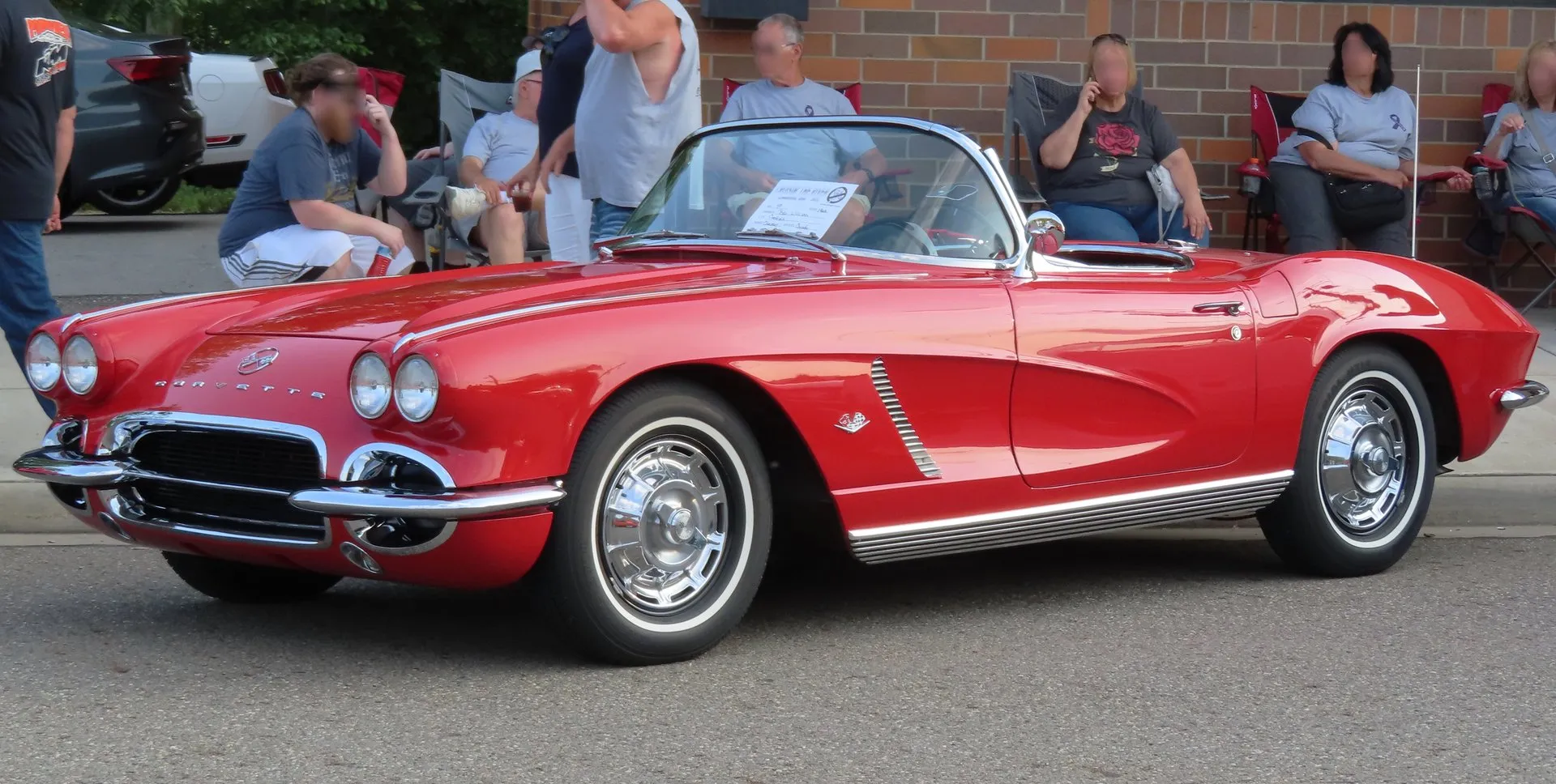
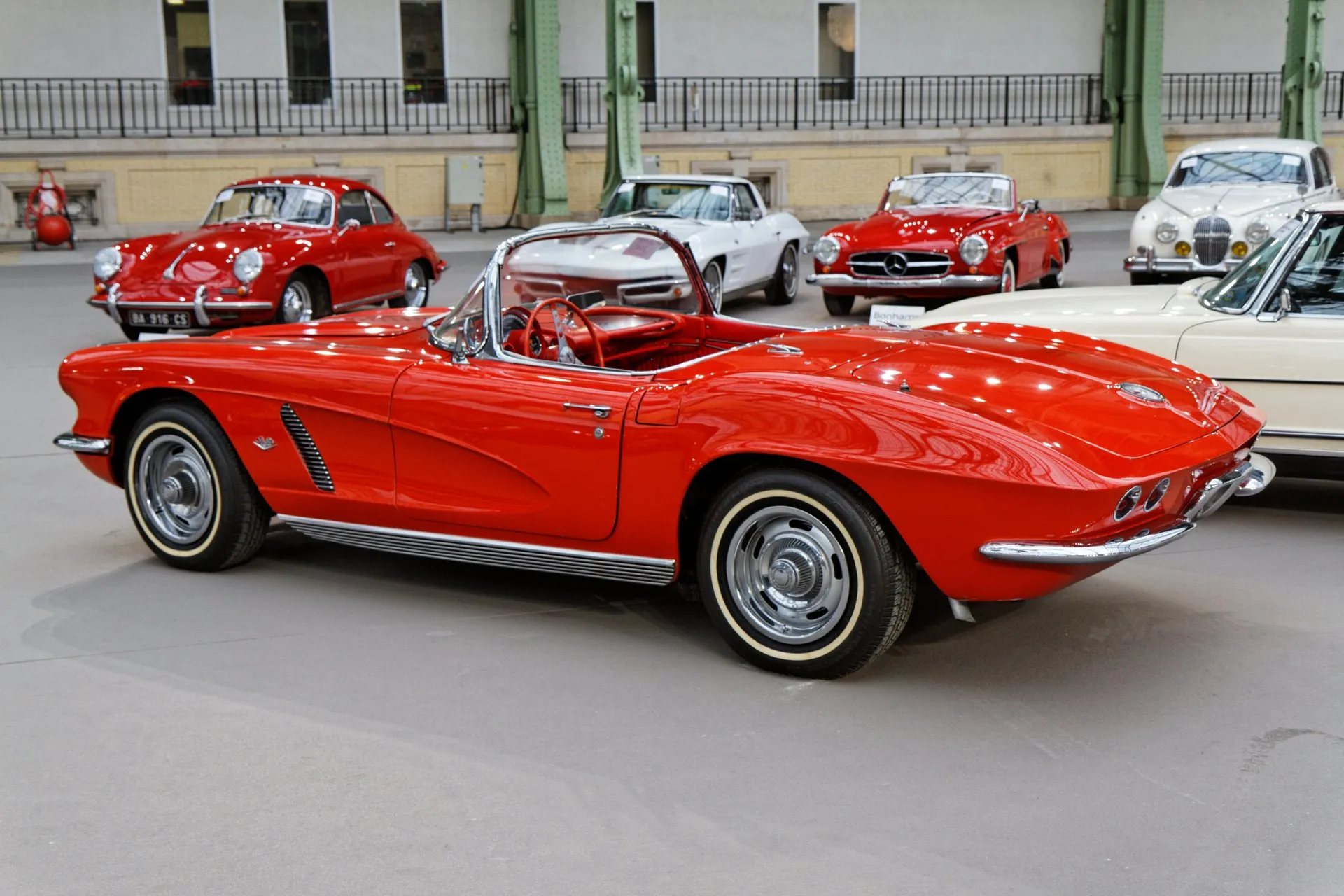
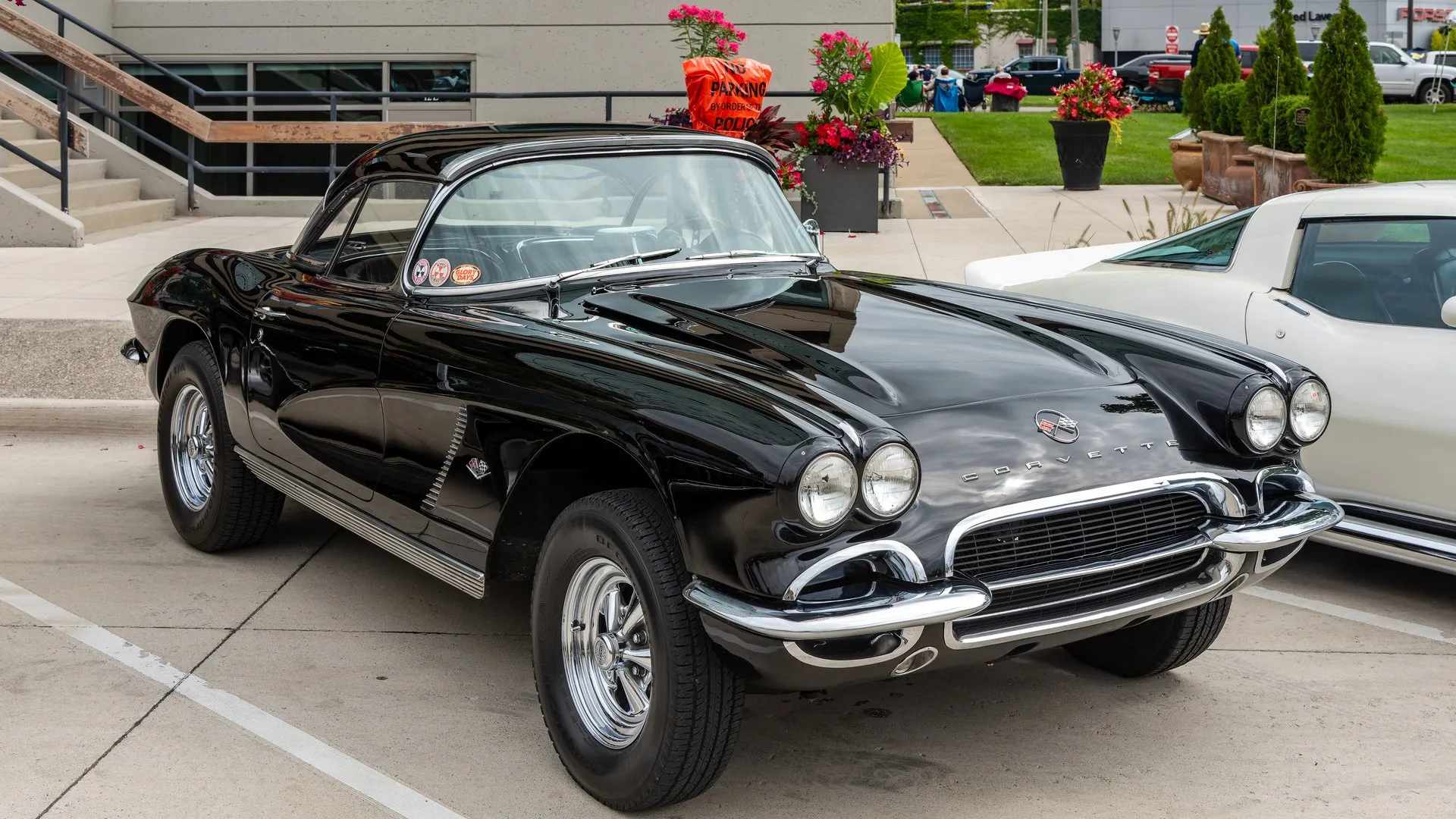
Lift the trunk lid on a 1962 Corvette and take a good look: no Corvette had another for more than three decades. Nothing on the cars that followed opened at the back until the 1982 Collector Edition’s glass hatch, and a trunk lid came back only with the C5 (1997–2004) convertible and hardtop. The 1962 is full of endings like that: the last C1 (1953–1962), the last Corvette with a solid rear axle and the last with exposed headlights until 2005. It was a beginning too, and that’s the part you feel from the driver’s seat: the first 327 V8, in four versions from 250 to 360 hp.
Chevrolet built more Corvettes for 1962 than in any year before, and on Hagerty’s averages it’s now the cheapest C1 to buy, strongest engines and all. The catch is in the numbers stamped on the car. The 1962’s engine codes came back for 1963 and 1964, and its 340 hp engine shares so much with the fuel-injected 360 that convincing fakes start there. Learn the numbers, and that same 340 turns out to be the year’s best buy.
- Built: 14,531, all convertibles, the most of any C1 year. 8,074 also got the removable hardtop, and 3,179 of those came without a soft top.
- Engines: a 327 V8, 250 to 360 hp gross, in four versions. 1,918 cars had the 360 hp fuel-injected engine, the “fuelie”.
- Price new: $4,038, with a heater standard for the first time.
- What one costs: Hagerty’s #3 (Good) average was $62,600 in January 2026; Bring a Trailer’s 2026 median, to October 18, was $63,250 (26 sales).
- Stingray: none until 1963, when the Sting Ray name arrived with the new car.
Frames, rocker supports, fiberglass and the generation’s fakes get the full treatment in the C1 buyer’s guide. What follows is what’s particular to 1962.
C1 Key figures
- Built
- 14,531, all convertibles
- Engines
- 327 V8, 250 to 360 hp gross
- Fuel-injected cars
- 1,918
- Price new
- $4,038
- Last with
- a solid rear axle
- Hagerty #3 average
- $62,600 (January 2026)
- Bring a Trailer, 2026
- $63,250 (26 sales)
Section 01
Telling a 1962 from a 1961
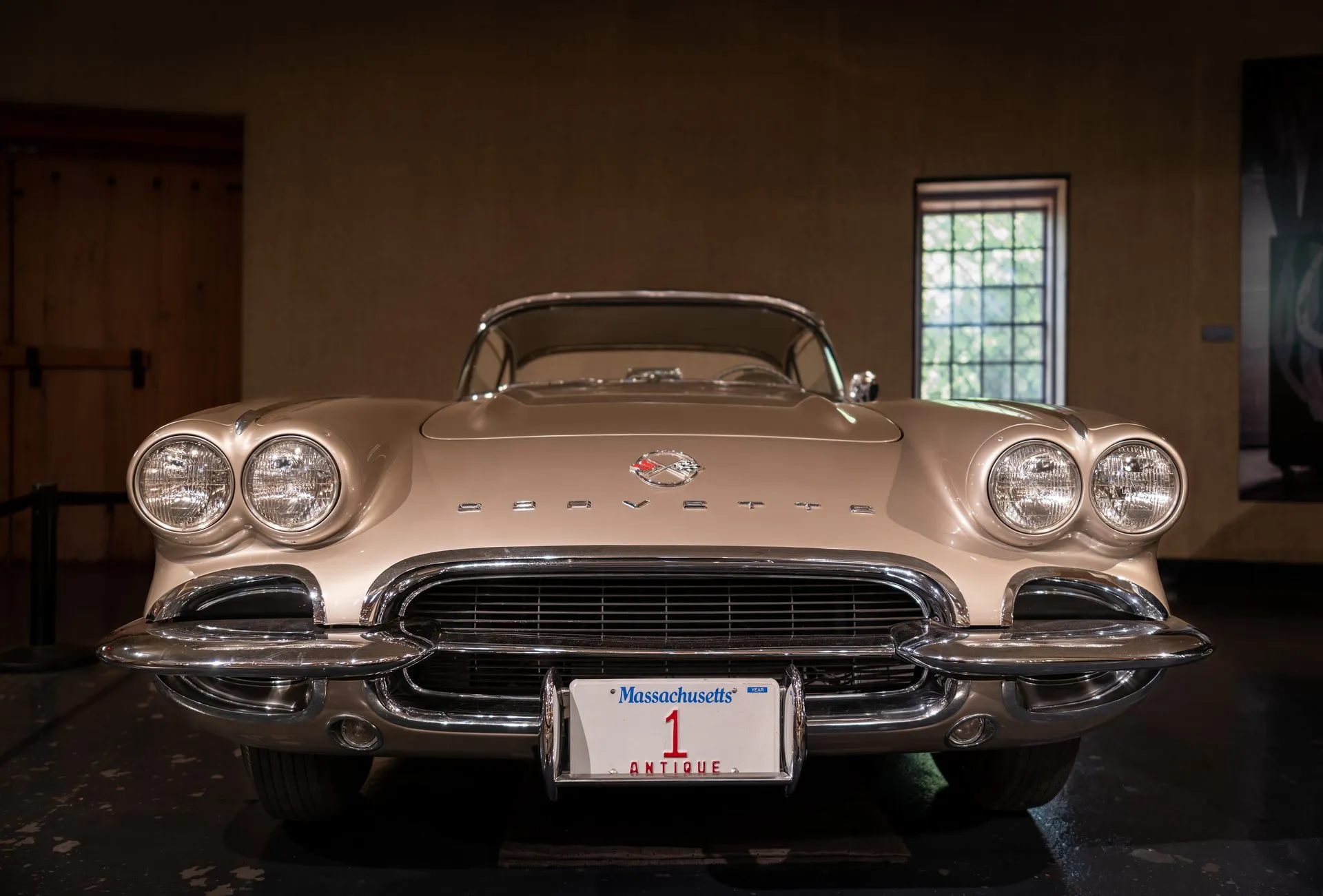
A 1962 wears the 1961’s body: the same ducktail with four round taillights, the same trunk lid, the same quad headlights in painted bezels and the same 102 in wheelbase. The Corvette Black Book, a reference whose 1962 production and option pages appear in GM’s 1962 kit beside Chevrolet’s own specification sheets, says the 1962 strongly resembled the 1961. The differences are in the trim, under the hood and on the order form.
On the outside:
- One-color coves. The bright outline around each side cove went, the fiberglass itself formed the lip, and with the trim gone Chevrolet stopped offering a contrasting cove color: a two-tone 1962 has been repainted. GM’s regular-equipment lists show the swap, a bright cove molding on the 1961 and a “Cove Area Simulated Grille” on the 1962.
- A single louver in the cove in place of 1961’s triple spear, and a black grille, both noted in Car and Driver’s December 1961 test.
- Ribbed sill trim. GM’s 1962 list adds a body sill molding that 1961’s lacks: the bright strip along each rocker.
- Narrow whitewalls, optional for the first time.
Painted headlight bezels are on both years’ lists, so they don’t tell the two apart.
Underneath and on the price list:
- The 327 in place of the 283, and no more dual four-barrel engines.
- A standard heater. On a 1961 it was a $102.25 option that 10,671 of 10,939 buyers took (1961 kit), and the 1962’s base price rose $104, to $4,038.00 from $3,934.00. A delete, RPO 610 (RPO is GM’s regular production option code), was meant for export cars.
- New gearing. The 340 and 360 hp engines kept the four-speed with the 2.20:1 first gear every 1961 four-speed had; the 250 and 300 hp engines got a new one with a 2.54:1 first. Those two engines’ four-speed and Powerglide cars also moved to a 3.36:1 axle from 1961’s 3.70 and 3.55, where the three-speed already was (1961 kit).
- An aluminum Powerglide case, the first, and Positraction (Chevrolet’s limited-slip axle) now offered with the automatic, which the Black Book says it wasn’t on 1961s.
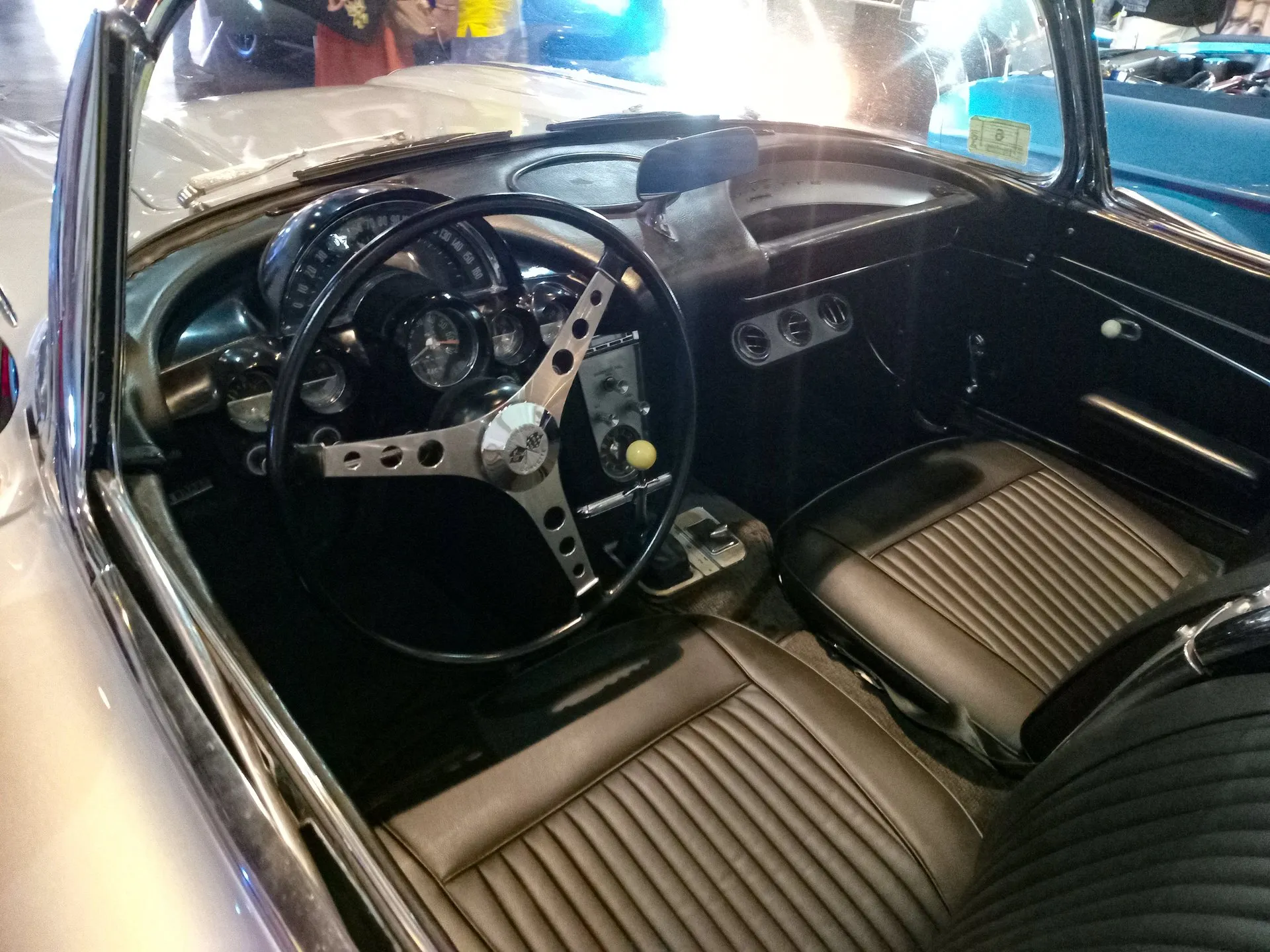
- A tachometer driven off the distributor on every engine. Before 1962, only fuel-injected Corvettes had that drive.
- Almond Beige on the color list, and 1961’s one-year Jewel Blue gone.
By the Black Book’s counts, Positraction went on 14,232 cars (97.9 percent, against 6,915 in 1961) and the radio on 13,076 (90.0 percent).
Section 02
The 327 in four strengths
All four 1962 engines are the same 327 cu in V8 on block casting 3782870: the 283 with its bore opened to 4.00 in and its stroke lengthened to 3.25 in. GM rated them gross, and its engine data gives the base engine’s 250 hp as 210 hp net, so don’t set these figures beside a 1972-or-later Corvette’s.
| Engine | Code and price | Induction and lifters | Gross power and torque | Compression | Valve covers | Pad suffix | Built |
|---|---|---|---|---|---|---|---|
| 250 hp | Standard | Carter four-barrel, hydraulic | 250 hp at 4,400 rpm; 350 lb-ft at 2,800 | 10.5:1 | Painted steel | RC manual, SC Powerglide | About 4,907 |
| 300 hp | RPO 583, $53.80 | Large Carter AFB four-barrel, hydraulic | 300 hp at 5,000 rpm; 360 lb-ft at 3,200 | 10.5:1 | Painted steel | RD manual, SD Powerglide | 3,294 |
| 340 hp | RPO 396, $107.60 | Large Carter AFB four-barrel, special camshaft, mechanical | 340 hp at 6,000 rpm; 344 lb-ft at 4,000 | 11.25:1 | Seven-fin cast alloy | RE, manual only | 4,412 |
| 360 hp | RPO 582, $484.20 | Rochester fuel injection, special camshaft, mechanical | 360 hp at 6,000 rpm; 352 lb-ft at 4,000 | 11.25:1 | Seven-fin cast alloy | RF, manual only | 1,918 |
The base-engine count is 14,531 less the other three; fuelies were 13.2 percent of the year.
What each step up bought
- 300 hp, $53.80: the large Carter AFB four-barrel, 1.935–1.945 in intake valves on GM’s 300 hp page (Car and Driver put the base engine’s at 1.72 in) and a crossover pipe in the dual exhaust.
- 340 hp, $107.60: GM’s special camshaft and mechanical lifters, domed impact-extruded pistons, a dual crankshaft pulley, a 700 rpm idle and its own tachometer, part 1549082 against the base engine’s 1549601, which owners call the high-redline tach.
- 360 hp, $484.20: the 340’s camshaft, valves, pistons, pulley and tachometer, plus Rochester fuel injection with a new electric choke (GM). The Black Book lists two units, 7017355 on early cars and 7017360.
For less than a quarter of the injection’s price, the 340 got most of what made the fuelie fast. That made it the order form’s best buy, and today the natural starting point for a fake (see Checking a 1962’s numbers).
Three gearboxes and six axle ratios
All three transmissions had floor shifters (GM):
- Three-speed manual, standard (2.47, 1.53, 1.00): 1,681 cars, 62 of them with the 340 or 360.
- Four-speed, RPO 685 at $188.30: 11,318 cars, 77.9 percent of the year. The 5,050 with a 250 or 300 got 2.54, 1.89, 1.51 and 1.00; the 6,268 with a 340 or 360 got 2.20, 1.64, 1.31 and 1.00.
- Powerglide automatic, RPO 313 at $199.10: 1,532 cars, 1,067 with the 250 and 465 with the 300. Never with the 340 or 360, so a fuel-injected 1962 with an automatic isn’t as built.
GM’s power-team chart puts a 3.36:1 axle under everything except the 340 and 360 four-speeds, which got 3.70. A 250 or 300 four-speed could take a 3.08 highway axle (RPO 203) at no charge. Positraction (RPO 675, $43.05) came in 3.36 with any three-speed or Powerglide, 3.08 or 3.36 with a 250 or 300 four-speed, and six ratios from 3.08 to 4.56 with a 340 or 360 four-speed.
What the testers timed
Car and Driver’s December 1961 test (opens in new tab) ran both ends of the range. The 360 hp car, on a 3.70 axle without Positraction, did the quarter mile in 15.0 s at 95 mph and reached 100 mph in 16.6 s, with a test driver advising shifts at 5,600 rpm, short of the 6,300 rpm redline. The 250 hp Powerglide car reached 60 mph in 8.8 s and ran the quarter in 16.8 s, and the magazine was surprised how little it gave away. GM’s own yardstick, pounds per gross horsepower, runs from 13.44 for a base three-speed car to 9.36 for a three-speed fuelie (GM).
Section 03
What buyers ordered in 1962
The $4,038 base price bought the 250 hp engine, the three-speed, vinyl trim and a soft top. The Black Book prices and counts the rest:
| Option | Code | Price | Cars |
|---|---|---|---|
| Positraction rear axle | 675 | $43.05 | 14,232 |
| Signal-seeking AM radio | 102 | $137.75 | 13,076 |
| Auxiliary hardtop | 419 | $236.75 | 8,074 |
| Direct flow exhaust | 441 | No charge | 2,934 |
| Sintered metallic brakes | 686 | $37.70 | 2,799 |
| Power windows | 426 | $59.20 | 995 |
| 15 x 5.5 in wheels, with small hubcaps | 276 | No charge | 561 |
| Power folding top | 473 | $139.90 | 350 |
| Heavy-duty brakes and steering | 687 | $333.60 | 246 |
| 24-gallon fuel tank | 488 | $118.40 | 65 |
| Whitewall tires | 1832 | $31.55 | Not counted |
| 3.08:1 axle | 203 | No charge | Not counted |
| Crankcase ventilation, for California | 242 | $5.40 | Not counted |
The rare ones. RPO 687, the racer’s package, brought special shocks, brake air scoops, sintered metallic linings, finned drums with cooling fans and a quick-steering adaptor that cut the wheel from 3.70 turns lock to lock to 3.25 (GM). It required the fuelie and Positraction, and 246 cars got it. The 24-gallon tank used part of the soft top’s storage well, so it came only with the hardtop and no soft top, on 65 cars.
How rare is a 1962? As a year, not very: 14,531 is the most of any C1, and no count of survivors turned up for this guide. The rare 1962s are the option cars: the 65 big tanks, the 246 heavy-duty brake packages, the 350 power tops and the 1,918 fuelies.
Colors. Seven: Tuxedo Black, Ermine White, Roman Red, Sateen Silver, Fawn Beige, Almond Beige and Honduras Maroon, with a black or white soft top and black, fawn or red interiors in GM’s suggested combinations. The Black Book counts only Fawn Beige (1,851) and Almond Beige (820), so the record can’t name the rarest 1962 color; it also notes Cadillac’s Royal Heather Amethyst on a few cars built for the Omaha Tangier Shrine Corvette Patrol. Whitewall cars generally got black wheels; blackwall cars and the 15 x 5.5 in wheels were body color. Nothing on a 1962 records its paint: the Black Book says colors weren’t coded to individual cars, and coded trim tags began only with the 1963. A window sticker or other original paperwork is the only proof of a factory color.
Section 04
The end of the C1, and the Sting Ray that replaced it
The Black Book page in GM’s kit lists the 1962’s lasts, among them the last exposed headlights, the last solid rear axle and the last conventional trunk, with nothing opening at the rear again until the 1982 Collector Edition’s hatch window. Two of those have since been overtaken. Exposed headlights came back on the 2005 C6 (2005–2013), as the Corvette generations guide explains. A trunk lid returned on C5 convertibles and hardtops: GM’s 2000 owner’s manual gives them a remote trunk release, plus a cable to open the lid if the battery goes flat. The solid axle never came back.
Car and Driver quoted Zora Duntov saying the 1962’s power increase would be the last “within the present chassis”, and the 1963 Sting Ray, the first C2 (1963–1967), bore him out. It kept the 1962’s four engine ratings and put them in a new ladder frame with independent rear suspension, under a body with hidden headlights and, for the first time, a coupe version. GM’s June 1963 price list put the convertible at $4,037, a dollar under the 1962’s $4,038. The serial plate moved under the glove box, and coded trim tags began. The 1963 guide covers that car and the C2 guide the generation.
Section 05
Checking a 1962’s numbers
Dating a 1962 by its serial
GM’s own example, 20867S100003, decodes as 2 for 1962, 0867 for the convertible, S for St. Louis and unit 100003 (GM). The 1962s ran from 100001 to 114531, and the Black Book’s last unit for each month dates a car (the third column is this site’s arithmetic):
| Month | Last unit built | Cars that month |
|---|---|---|
| August 1961 | 100443 | 443 |
| September 1961 | 100827 | 384 |
| October 1961 | 102065 | 1,238 |
| November 1961 | 103465 | 1,400 |
| December 1961 | 104766 | 1,301 |
| January 1962 | 106234 | 1,468 |
| February 1962 | 107585 | 1,351 |
| March 1962 | 109116 | 1,531 |
| April 1962 | 110519 | 1,403 |
| May 1962 | 112035 | 1,516 |
| June 1962 | 113459 | 1,424 |
| July 1962 | 114520 | 1,061 |
| August 1962 | 114531 | 11 |
Owners in two forums, 22 years apart, put the plate in the same place: spot-welded to the steering column under the hood, ahead of the firewall (CorvetteForum, 2026 (opens in new tab); Corvette Action Center forum, 2004). GM’s 1962 body page names “L.H. side of steering column” among its number locations, though its serial line still says “LF body hinge pillar”, the wording GM used before the plate moved during 1960 (GM; see the 1960 guide). A door-post plate on a 1962 needs explaining. The frame stamp and the title should carry the plate’s number; the C1 guide says where to find the stamp.
The engine pad: codes that outlived 1962
The pad sits at the front of the block’s right side (GM). On a 1962 it carries a Flint assembly date, a two-letter suffix from the engine table in The 327 in four strengths, and the car’s serial derivative, a short form of its serial that should match the plate (CorvetteForum, 2025). A single-letter suffix marks a passenger-car 327, a long-time Corvette Action Center member says (2008).
None of 1962’s six suffixes appears in GM’s 1961 list, but all six returned for 1963 with the same meanings, and 1964 kept them, with RE and RF moved to its 365 and 375 hp engines (1964 kit; the 1963 guide covers that side). Block 3782870 sits under every 1962–1964 Corvette and, owners say, passenger-car and truck 327s too. Heads 3795896 and 3782461 span the same three years, and 3782461 goes back to the 1961 fuelies.
On paper, what separates a 1962 engine from a 1963 is bolt-on parts: generators where 1963 has alternators, different carburetor and distributor numbers, and injection unit 7017375 on a 1963 fuelie (1963 kit). Parts get swapped, so the pad has to make the case: a suffix that fits the engine and gearbox, a derivative that matches the plate, and a Flint date no later than the car’s build month. The National Corvette Restorers Society (NCRS) takes 38 points off a judged car with a painted or obscured pad, so a hidden pad is a question for the seller.
Turning a 340 into a fake fuelie
A fuelie is worth more than a carbureted car, which is reason enough to build one. NCRS spells out the method in its definition of counterfeiting (opens in new tab): swap the carburetor for an injection unit, then stamp numbers and a suffix on the block so they look original. On a 1962 the 340 is the natural donor. It already has the fuelie’s camshaft, valves, pistons, compression, pulley, valve covers and tachometer (GM), and the only 1962 fuel-injection engine was the 360 hp manual. Swap the induction, stamp RF where RE was, and much of what a buyer checks already matches.
In a 2011 thread, one owner said he knew of three fake 1962 fuelies, originally 340 hp cars, that passed scrutiny (opens in new tab), and another said a fully correct conversion could fool the most knowledgeable judges. The clues owners and the Black Book point to, none of them proof alone:
- Holes in the driver-side inner fender for the injection’s air cleaner and its hose bracket; GM puts that air cleaner on the left fender skirt.
- A firewall dimple, which one owner called hard to fake from either side, and an off-center tach-cable hole.
- Rectangular fuel-injection emblems and their mounting holes.
- The washer bottle on the right behind heat shields, where the Black Book puts a carbureted 1962’s on the left. 1961 fuelies did the same, so it marks a fuelie, not a year.
- The distributor: 1111011 on a fuelie (1110990 early), which also drives the injection’s fuel pump, against 1110985 on a 340.
A converter swaps all of that too, so hardware only shows that a car is equipped as a fuelie; proof is paper. On Bring a Trailer in 2026, a “Fuel-Injected” car whose listing said its pad was believed restamped sold for $54,500 (July 14), while six titled “327/360 Fuelie” brought a $95,250 median. Even a matching pad doesn’t end the argument. The cheapest of those six, also $54,500 (May 24), had an RF pad matching its serial, but bidders pointed to restoration photos supplied with it that showed a carbureted engine and no fuel-injection emblems. The selling dealer called the stampings authentic and said the photos might be of another car.
Paper that settles it
NCRS’s Historic Document Service (opens in new tab) gives members GM’s shipping data for 1962s “after number 6000”: the selling dealer and production date, not the options, for $50 as of October 2026. Read as the 6,000th car, which the Black Book’s monthly figures put in January 1962, that covers roughly the year’s last 8,500 cars (this site’s reading). A window sticker or purchase papers carry what the car can’t, and a judging history (NCRS’s Top Flight award takes 94 percent of 4,500 points) shows how a car measured up.
Section 06
What Chevrolet fixed during 1962
Chevrolet’s own 1962 bulletins record what went wrong and what changed on the line. They survive as Corvette Action Center’s transcriptions; this guide didn’t see the originals.
- A stronger clutch, November 28, 1961. After more clutch failures on 1961 high-performance cars, every mechanical-lifter 1962 (the 340s and 360s) got a pearlitic malleable iron pressure plate in place of grey cast iron, marked by a cast depression in each driving lug.
- Powerglide teething on early cars. The new aluminum Powerglide could upshift late or not at all, usually from debris in the valve body or governor, and early dipsticks’ Full mark sat about half an inch below the later one’s, so a car could run low while reading full. A revised valve body went in from November 30, 1961, and a revised governor and rear pump from December 28.
- Carburetor revisions. The Carter AFB on 300 hp manual and 340 hp engines (
GM 3797699, OEM) changed in stages, each marked by a letter on the throttle-body flange. The third, C, from February 15, 1962, richened the mixture at wide-open throttle to head off detonation or preignition. - A bolted balancer, March 1, 1962. From then, the 340 and 360’s harmonic balancer was also bolted to a crankshaft tapped at the front (
GM 3823299, OEM). A 340 or 360 with a pad dated March 1962 or later should have one, if its original crankshaft is still inside. - Oil pressure on the base engine, October 16, 1962. For a 250 hp engine losing oil pressure at high rpm (opens in new tab), Chevrolet’s fix was the high-performance engines’ upper oil-pan baffle (
GM 3769768, OEM), which it said “may” cure it.
NHTSA, the US road-safety agency, lists no recalls (opens in new tab) and no owner complaints for the 1962 Corvette (both checked October 19, 2026). The empty file is no clean bill of health: owner complaints start in 1994, 32 years after these cars were new, and NHTSA’s bulletin files have nothing from GM for a Corvette older than the 1984 model year.
The expensive problems aren’t 1962’s alone. The frame’s rear crossmember, steel rocker supports that rust unseen inside the sills (one 1962 owner found no drain holes in them, CorvetteForum, 2012), fiberglass cracks, leaks and heat are generation-wide, and the C1 guide takes them one by one.
Section 07
Ten checks on a 1962
- The plate: spot-welded to the steering column ahead of the firewall. A plate on the door post, or one that isn’t spot-welded, needs a story and paperwork.
- The frame stamp and the title carry the plate’s number.
- The build month, from the serial and the table in Checking a 1962’s numbers.
- The pad: a two-letter suffix (RC, RD, RE, RF, SC or SD) that fits the car’s engine and gearbox, a Flint date no later than the build month, a derivative that matches the plate, and no paint over it.
- The parts against the claimed engine: painted steel valve covers on a 250 or 300, seven-fin cast alloy on a 340 or 360; a generator, not an alternator; carburetor and distributor numbers from 1962’s list; a bolted balancer on a 340 or 360 whose pad is dated March 1962 or later.
- Combinations GM built: no Powerglide with a 340 or 360; a 4.11 or 4.56 axle only with Positraction and a 340 or 360 four-speed; RPO 687 only with the fuelie and Positraction; the 24-gallon tank only on a car without a soft top.
- A claimed fuelie: an RF pad and a manual gearbox, then paperwork and judging history, then the owners’ clues in Checking a 1962’s numbers.
- The coves: one color, no bright outline, a single louver. A two-tone cove means a repaint.
- The frame and rocker supports, on a lift, with the C1 guide’s checklist in hand.
- A second opinion from a C1 specialist, ideally an NCRS judge, before any money moves.
Section 08
1962 prices: Hagerty against Bring a Trailer
What is a 1962 Corvette worth? The middle half of 2026’s Bring a Trailer sales ran from about $56,500 to $74,250, and fuel-injected cars with proof brought more.
Bring a Trailer. From January 1 to October 18, 2026, Bring a Trailer (opens in new tab) listed 37 cars titled as 1962 Corvettes and sold 26 at a median of $63,250, from $38,000 for a non-running 327/300 project (September 24) to $127,000 for an NCRS Top Flight 327/360 fuelie (July 7). By this site’s calculation from each sold price:
| 1962s on Bring a Trailer, January 1 to October 18, 2026 | Sold | Median | Range |
|---|---|---|---|
| Every listing titled as a 1962 Corvette | 26 of 37 | $63,250 | $38,000–$127,000 |
| No modification in the title | 24 of 28 | $62,000 | $38,000–$127,000 |
| Of those, carbureted | 16 of 17 | $60,200 | $38,000–$88,000 |
| Of those, 327/340 in the title | 6 of 6 | $60,000 | $53,500–$72,000 |
| Of those, fuel injection in the title | 8 of 11 | $87,750 | $54,500–$127,000 |
| Modified (engine swap, five-speed) | 2 of 9 | Too few | $64,500 and $75,000 |
Over the 12 months to October 18, 28 of 43 sold at a $62,000 median, the same figure the C1 guide gets for 1961 and 1962 together. Calendar 2025’s median was $67,810 (24 sales) and 2024’s $84,000 (13), samples small enough to read with care.
Hagerty. Hagerty’s price guide (opens in new tab), archived January 23, 2026, values a #3 (Good) 1962 at $57,800 with the 250 hp engine, $61,700 with the 300, $60,600 with the 340 and $70,300 with fuel injection, each $1,800 to $2,200 below its October 2025 figure. The plain average, $62,600 (January 2026), is the lowest of any C1 year.
The two disagree about the fuelie: Hagerty puts it $12,500 above the base car, while Bring a Trailer’s fuel-injected median ran $27,550 above the stock carbureted one. Both put the 340 among the cheaper cars. One is this year’s auction results, the other a guide value for a #3 car. classic.com shows no 1962-only figure this guide could read; its archived March 2026 average for 1961 and 1962 together was $82,709.
Section 09
Buy the 340, and make a fuelie prove itself
Buy a documented 340 hp four-speed. It’s the 1962’s open secret: the fuelie’s camshaft, compression and tachometer for $107.60 over the base car, peak power at 6,000 rpm, a thousand above the 300, and 4,412 built to choose from. The 2026 market hasn’t caught on. Six cars titled 327/340 sold on Bring a Trailer at a $60,000 median, level with carbureted 1962s as a whole, and Hagerty values the 340 at $60,600, below its own 300 hp figure. Insist on an RE pad whose date and derivative fit the car. (The pick is this site’s own, from GM’s pages and the 2026 sales; none of the forum threads behind this guide ranks the 1962 engines.)
For less, a 250 or 300 hp car whose plate, frame and pad agree is the way in: Hagerty’s lowest 1962 figure is the 250’s $57,800. Don’t rule out the Powerglide, either. Car and Driver called its automatic test car a comfortable cross-country tourer.
A fuelie suits the buyer who wants the paper as much as the car. Buy one only with an RF pad, a matching derivative, documents and a judging history, and expect to pay for them: 2026’s six “327/360 Fuelie” sales had a $95,250 median.
Steer clear of a door-post plate nobody can explain, a single-letter suffix sold as original, a fuel-injected car with an automatic, a “360” that can’t prove its pad, or a two-tone cove sold as factory paint.
Do it right and a 340 four-speed gives you the first 327 and the last solid axle in one car, with a trunk lid behind the seats and the headlights out in the open. At about $60,000, that’s America’s sports car doing what it has always done: more performance than the money should buy. The Sting Ray that came next is in the 1963 guide, and the best Corvette years guide weighs the 1962 against every generation since.
Section 10
Sources
- GM Heritage Center: 1962 Corvette vehicle information kit files.zipcorvette.com This site's library. Reproduced Corvette Black Book pages (production, engine codes, options, prices, colors): PDF pages 4 and 6. Chevrolet's 1962 Corvette supplement (October 1961, revised January and April 1962): pages 13–20 and 23–28. GM's AMA specifications (issued October 23, 1961): page 59.
- GM Heritage Center: 1961 Corvette vehicle information kit files.zipcorvette.com PDF pages 4–5 (Black Book: price, heater, engine codes, option counts, colors), 11 (regular equipment) and 16 (power teams and axles), for what 1961 had.
- GM Heritage Center: 1963 Corvette vehicle information kit files.zipcorvette.com PDF pages 4 (Black Book: engine codes, castings, alternators and the 1963 injection unit) and 8 (June 14, 1963 price list).
- GM Heritage Center: 1964 Corvette vehicle information kit files.zipcorvette.com PDF page 4 (Black Book): the 1962 engine codes and castings reused.
- GM: 2000 Corvette owner's manual files.zipcorvette.com This site's library. PDF pages 129 (the remote trunk release on C5 convertibles and hardtops) and 71 (the trunk lid's manual release cable, for a dead battery).
- Car and Driver: 1962 Chevrolet Corvette road test (opens in new tab) caranddriver.com From the December 1961 issue: the 360 hp and 250 hp Powerglide cars, the new four-speed and 3.08 axle, the trim changes and Zora Duntov's remark.
- NHTSA recalls, 1962 Chevrolet Corvette (opens in new tab) api.nhtsa.gov Checked October 19, 2026. None.
- NHTSA owner complaints, 1962 Chevrolet Corvette (opens in new tab) api.nhtsa.gov Checked October 19, 2026. None on file; NHTSA's complaint file begins in 1994.
- Corvette Action Center: 1962 Corvette service bulletin, loss of oil pressure (opens in new tab) corvetteactioncenter.com Chevrolet TSB #838, October 16, 1962, as transcribed by Corvette Action Center. Read through Internet Archive copies, like the bulletins below.
- Corvette Action Center: new clutch pressure plate for the 1962 Corvette (opens in new tab) corvetteactioncenter.com Chevrolet Advance Information A.I. #62-3, November 28, 1961, as transcribed.
- Corvette Action Center: aluminum Powerglide shift problems (opens in new tab) corvetteactioncenter.com Chevrolet TSB DR #514, January 16, 1962, as transcribed.
- Corvette Action Center: aluminum Powerglide valve body, governor and rear pump changes (opens in new tab) corvetteactioncenter.com Chevrolet TSB DR #525, March 13, 1962, as transcribed.
- Corvette Action Center: 1962 Corvette fuel injection (opens in new tab) corvetteactioncenter.com Chevrolet Service News, March 1962, as transcribed.
- Corvette Action Center: improved harmonic balancer attachment (opens in new tab) corvetteactioncenter.com 1962 Product Data Book, April 9, 1962, as transcribed.
- Corvette Action Center: Carter AFB carburetor revisions (opens in new tab) corvetteactioncenter.com 1962 Product Data Book, May 11, 1962, as transcribed.
- NCRS: Historic Document Service (opens in new tab) ncrs.org Shipping data for 1962 Corvettes after number 6,000. Fetched October 19, 2026.
- NCRS: judging awards (opens in new tab) ncrs.org Top Flight, the engine pad deduction and NCRS's definition of counterfeiting. Fetched October 19, 2026.
- Hagerty Price Guide: 1953–1962 Chevrolet Corvette (opens in new tab) web.archive.org Internet Archive copy of January 23, 2026: the 1962 #3 average and the January 2026 and October 2025 #3 values for each 1962 engine.
- Bring a Trailer: Chevrolet Corvette C1 results (opens in new tab) bringatrailer.com Every listing titled as a 1962 Corvette, read October 19, 2026. The medians are this site's calculation from each listing's sold price.
- classic.com: 1961–1962 Chevrolet Corvette market (opens in new tab) web.archive.org Internet Archive copy of March 2, 2026. The 1962-only page refused access and has no archived copy.
- CorvetteForum thread: how to spot a fake 1962 fuel-injected car (opens in new tab) corvetteforum.com April 2011.
- CorvetteForum thread: C1s and C2s for under $50K (opens in new tab) corvetteforum.com June to October 2026. Asking prices and owners' notes.
- Corvette Action Center thread: C1 advice before a purchase (opens in new tab) forums.corvetteactioncenter.com January 2004.
- Corvette Action Center thread: how to tell the C1s apart (opens in new tab) forums.corvetteactioncenter.com December 2004.
- CorvetteForum thread: C1 engine number question (opens in new tab) corvetteforum.com May 2025.
- Corvette Action Center thread: identifying a 327 engine (opens in new tab) forums.corvetteactioncenter.com March to April 2008.
- CorvetteForum thread: C1 rusted rocker panel support (opens in new tab) corvetteforum.com April to May 2012.